

Local Trucking Companies Near Me
Searching for local trucking companies near me often returns a long list of names with no way to verify capacity, safety ratings, or lane coverage. FullTruckload.com cuts through that uncertainty by connecting shippers directly to vetted full truckload carriers across regional and national lanes, backed by a single point of contact and advanced logistics technology.
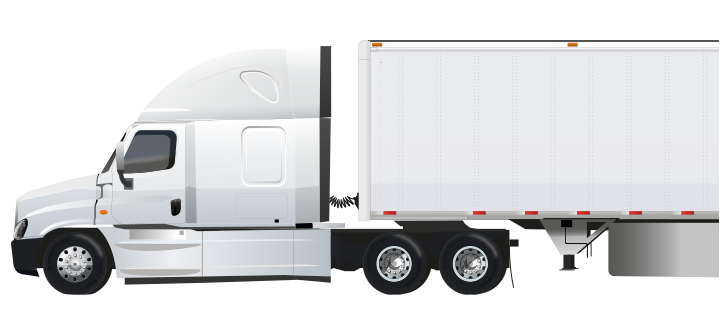





Full Truckload Carrier Services Built for B2B Shippers
Regional Truck Companies and the Network Behind the Local Promise
Not every trucking company that shows up in a search can actually cover your lane. Regional truck companies often have strong density on short-haul corridors, but their capacity thins out quickly beyond their home territory. That gap is where shippers run into trouble.
FullTruckload.com operates as a non-asset truck broker with access to carriers across North America, including nearby full truckload operators, regional fleets, and national freight transportation providers. Rather than managing individual carrier relationships, shippers work through a single point of contact to access truckload shipping capacity, competitive freight rates, and professional drivers suited to their specific delivery needs.
The network is built around full truckload capacity, but it also supports expedited freight solutions, flatbed services, and heavy haul moves. Whether you need local trucking companies near me for a recurring lane or a one-time regional move, the carrier match is based on equipment fit, safety record, and service reliability, not just proximity.

Full Truckload Carriers
Access nearby full truckload carriers and established truck companies through a single brokerage relationship. Carriers are matched by lane, equipment type, and safety record, so your freight moves on well-maintained trailers with experienced drivers who know the route. This is truckload shipping built around your specific needs, not a generic load board match.

Expedited Freight Services
When standard ground transit is not fast enough, expedited freight solutions provide standby capacity for time-sensitive shipments. Expedited truckers and over-the-road freight providers in the network are positioned to move cargo with minimal lead time across regional and national lanes, supporting same day freight delivery and next-day coverage where standard ground transportation falls short.

Flatbed Trucking
Oversized loads, construction equipment, and oilfield machinery require more than a standard dry van. Flatbed services and specialized equipment in the carrier network handle heavy haul moves, dimensional freight, and shipments that cannot be enclosed, with full regulatory compliance on every move. Construction materials, building materials, and project cargo are all within scope.
WHAT WE DO
Trucking Services Explained
Understanding how shipping services work across different equipment types and service levels helps shippers make faster, better decisions when freight requirements change. These resources cover the full range of ground and expedited options available through the FullTruckload.com carrier network, from hotshot trucking and flatbed services to full truckload shipping and dedicated trucking solutions.

How FullTruckload.com Serves Shippers Across Every Lane
KEY BENEFITS
NATIONWIDE NETWORK
FullTruckload.com connects shippers to local trucking companies near me across an extensive coast-to-coast network of regional and national carriers. Rather than searching for nearby freight carriers one lane at a time, shippers access multiple truck companies through a single relationship. The platform covers local commercial operators as well as long haul providers, giving shippers consistent coverage whether the move is 200 miles or cross-country. Competitive freight rates are sourced from real carrier capacity, not inflated spot market estimates. This is ground transportation built for shippers who need reliable, repeatable coverage.
EXPLORE OUR SERVICES



Who Uses Local Trucking Companies Near Me for Business Freight
- Manufacturing Freight
- Oil Field Equipment
- Expedited Freight Moves
- Retail Distribution
- Construction Site Delivery
- Automotive Parts Shipping
- Truckload Brokerage Support

Manufacturing Freight
Manufacturers running tight production schedules need local trucking companies near me they can count on for consistent pickup and delivery windows. A missed load does not just delay a shipment; it can stall an entire production line. FullTruckload.com matches manufacturers with professional drivers and well-equipped fleets on their core regional lanes, providing reliable, repeatable service that supports just-in-time supply chain management without requiring shippers to manage multiple carrier relationships directly.

Oil Field Equipment
Oilfield equipment moves often involve heavy haul freight, oversized loads, and remote delivery locations that smaller carriers cannot handle. Shippers in the oil field sector need truck companies with the right equipment, compliance experience, and drivers familiar with site access requirements. The FullTruckload.com network includes flatbed services and specialized carriers equipped for construction equipment, project cargo, and heavy machinery, covering both regional corridors and longer national lanes across North America.
Expedited Freight Moves
When a shipment cannot wait for standard transit, expedited freight services provide a direct path from origin to destination using dedicated capacity. Freight providers in the network maintain standby trucks and over-the-road drivers ready to move on short notice. This covers same day freight delivery on regional lanes and overnight shipping across longer corridors, without the complexity of coordinating with multiple carriers or relying on a load board for last-minute capacity. Day freight delivery services are available for urgent orders that cannot wait.
Retail Distribution
Retail shippers moving full truckload volumes between distribution centers and store networks need local trucking companies near me that understand delivery appointment windows and compliance requirements. Missed appointments carry real financial penalties. FullTruckload.com connects retail shippers with transportation services built around schedule adherence, real-time updates, and carrier accountability, reducing the friction that comes from managing a fragmented mix of smaller operators across a regional distribution footprint.

Construction Site Delivery
Construction projects depend on building materials and construction materials arriving on schedule, often at sites with limited access and no loading dock infrastructure. Local trucking companies near me for construction freight require carriers with flatbed services, flexible delivery coordination, and drivers experienced with job site conditions. FullTruckload.com sources nearby truck companies that match the equipment and service profile for construction freight, from structural steel and lumber to heavy machinery and oversized loads.

Automotive Parts Shipping
Automotive supply chains run on precision. A delayed tractor trailer carrying production parts can shut down an assembly line faster than almost any other disruption. Shippers in the automotive sector use FullTruckload.com to access dedicated trucking solutions and expedited freight coverage on critical lanes, with real-time updates and a single point of contact who can escalate quickly if a load is at risk. Local trucking companies near me with automotive experience are matched based on service history and equipment standards.

Truckload Brokerage Support
Some shippers have an own fleet for core lanes but need overflow capacity when volume spikes or equipment is unavailable. FullTruckload.com functions as a truck broker for these situations, providing access to an extensive network of vetted carriers without requiring shippers to build new carrier relationships from scratch. This is particularly useful for shippers managing seasonal volume, project-based freight, or lanes where primary carriers cannot provide consistent coverage. The ability to book loads quickly through a committed logistics company is what keeps operations moving efficiently.
LOCAL TRUCKING EXPERTISE
What to Know Before Choosing Local Trucking Companies Near Me
How to Choose the Right Trucking Company
Finding the right trucking company in your area involves more than a quick search. Shippers need to assess safety ratings, carrier reputation, and whether the motor carrier operates with well maintained equipment suited to the freight requirements at hand.
Evaluating Safety Ratings and Legal Compliance
The Federal Motor Carrier Safety Administration publishes carrier safety scores that reflect inspection history, out-of-service rates, and legal compliance records. Reviewing these scores before booking a local carrier protects your cargo and your business from liability exposure.
National trucking companies often carry strong FMCSA profiles, but smaller carriers with a solid reputation in your region can match or exceed those standards. The key is verifying that any carrier you consider holds active operating authority and adequate cargo insurance.
Assessing Equipment and Fleet Maintenance Standards
Fleet maintenance practices directly affect on-time performance and cargo safety. Ask carriers how frequently they inspect their tractor trailer units and whether they operate an own fleet or rely heavily on owner operators for capacity.
Well equipped carriers with a dedicated maintenance program experience fewer breakdowns and fewer delays. This is especially important for time-sensitive shipments where a mechanical failure can cascade into missed delivery windows.
Look for trucking companies that document their preventive maintenance schedules and can demonstrate low out-of-service rates. These details separate professional operations from those that cut corners to stay competitive on freight rates.

Local Expedited Freight Solutions That Move Cargo Fast
When a production line stops or a customer deadline is hours away, expedited freight services from nearby carriers become a critical resource. Local expedited freight providers can often dispatch a vehicle faster than national networks because they maintain available loads and drivers within your region.
Ground Expedited Trucking for Time-Critical Loads
Ground expedited trucking uses cargo vans, sprinter vans, and straight trucks to move smaller shipments on direct, no-stop routes. Unlike standard over-the-road truck drivers who may consolidate freight across multiple stops, expedited truckers run point-to-point to preserve transit time.
For shipments that do not require a full tractor trailer, a cargo van or sprinter unit keeps costs lower while still delivering the speed of a dedicated run. Many expedited freight companies maintain a broad range of vehicle classes to match the right asset to the load size.
Same Day Delivery and Next Day Options
Same day delivery is achievable for most metro corridors when a local carrier has drivers staged nearby. Next day service extends that reach across regional lanes, covering distances that ground expedited trucking handles efficiently without the cost of air freight.
Expedited freight solutions work best when shippers communicate freight requirements clearly upfront, including dimensions, weight, and any hazardous materials considerations. This allows the carrier to dispatch the correct vehicle class immediately rather than reassigning mid-route.
Expedited freight services from local trucking companies also tend to offer more direct communication with dedicated drivers, giving shippers real-time visibility into load status without relying on automated systems alone.

Flatbed Trucks and Heavy Haul Capabilities Explained
Not every load fits in a standard enclosed trailer. Flatbed trucks, step decks, and specialized heavy haul equipment exist specifically for cargo that exceeds standard dimensional or weight limits. Local trucking companies with flatbed capacity are essential partners for construction, manufacturing, and energy sector shippers.
Project Cargo and Oilfield Equipment Transport
Project cargo moves like large industrial machinery, structural steel, and oilfield equipment require careful route planning, permitting, and sometimes escort vehicles. Oil field operations in particular generate frequent demand for heavy haul moves that standard carriers cannot legally or physically accommodate.
Carriers experienced in this space understand state-by-state permit requirements, bridge weight restrictions, and the securement standards that protect both the load and other road users. Shippers moving oilfield equipment should confirm that any carrier they select has documented experience with oversized loads and maintains the rigging hardware to secure them properly.
Tanker and Hazardous Materials Considerations
Some local freight requirements involve tanker transport or loads classified as hazardous materials under DOT regulations. These moves demand drivers with specific endorsements, carriers with appropriate insurance, and strict legal compliance throughout the transit.
Trucking companies that handle hazardous materials must maintain detailed documentation, including shipping papers, placards, and emergency response information. Shippers should request proof of hazmat certification and review the carrier's safety record before tendering this type of freight.
For heavy haul and specialized moves, competitive rates should not be the only selection criterion. The carrier's equipment condition, permit experience, and commitment to safety standards carry more weight than price alone when the cargo is high-value or high-risk.

Full Truckload and Less Than Truckload: Choosing Correctly
The decision between full truckload and less than truckload shipping affects transit time, freight rates, and cargo handling exposure. Local trucking companies typically offer both options, but the right choice depends on shipment volume, urgency, and how many times the freight can tolerate being touched.
When Full Truckload Service Makes Sense
A truck load shipment occupies the entire trailer and moves directly from origin to destination without stops at intermediate terminals. This reduces handling, lowers damage risk, and typically delivers faster than consolidation-based services. For shippers moving 10 or more pallets, or any freight that is fragile or high-value, full truckload is usually the better operational choice.
Local and regional full truckload moves also give shippers more direct relationships with dedicated drivers and carriers. That direct line of communication improves accountability and makes it easier to resolve issues quickly when they arise.
Less Than Truckload for Smaller Shipments
Less than truckload service consolidates smaller shipments from multiple shippers onto a single trailer. While this lowers the per-shipment cost, it introduces additional handling at terminals and typically extends transit time compared to a direct truck load move.
For non-urgent smaller shipments that do not justify the cost of a dedicated trailer, less than truckload remains a practical option. Shippers should weigh the savings against the increased handling exposure, particularly for fragile or high-value goods.
Palletized trucking through LTL networks works best when freight is properly packaged, clearly labeled, and dimensionally consistent. Carriers assess dimensional weight alongside actual weight, so efficient palletization directly affects the final freight rates a shipper pays.
Technology Tools That Improve Local Trucking Performance
The trucking industry has shifted significantly toward technology-driven operations over the past decade. Local trucking companies that invest in advanced logistics technology give their clients better visibility, faster communication, and more reliable delivery performance across every lane they serve.
Real-Time Tracking and Load Board Integration
Real-time tracking allows shippers to monitor their freight from pickup through delivery without relying on manual check-in calls. Modern carrier networks integrate GPS telemetry with load board platforms, giving dispatchers and clients a shared view of truck location and estimated arrival.
Load board technology also helps carriers find available loads faster, reducing empty miles and improving operational efficiency across their network. When carriers run fewer empty miles, they can offer more competitive rates while maintaining profitability, which benefits shippers on both sides of the transaction.
Streamlining Manual Processes with Digital Tools
Many smaller carriers still rely on manual processes for dispatch, invoicing, and compliance documentation. Transitioning to digital tools streamlines these workflows, reduces errors, and accelerates cash flow for both the carrier and the shipper.
Third-party logistics providers often serve as the technology bridge between shippers and multiple carriers, aggregating data from across a carrier network into a single dashboard. This is particularly valuable for shippers managing freight across several local trucking companies simultaneously.
For businesses evaluating trucking services, asking about a carrier's technology stack is now as important as asking about their equipment. Carriers that can provide electronic proof of delivery, automated freight invoicing, and integrated tracking demonstrate the kind of operational efficiency that keeps supply chain partners aligned and business moving forward.
Expedited Trucking Excellence: Explore Our Resource and Blog Section
FullTruckload.com is a leader in the trucking industry. Our blog and resource section offers information and resources to improve your logistics strategy.

From critical shipments to ongoing support, see why businesses continue to choose FullTruckload.com