
53 Ft Dry Vans
When there's no room for delay, 53' dry vans deliver full truckload capacity with the speed and reliability expedited shipping demands.
EXPEDITED DELIVERY SOLUTIONS
What Is a 53' Dry Van?
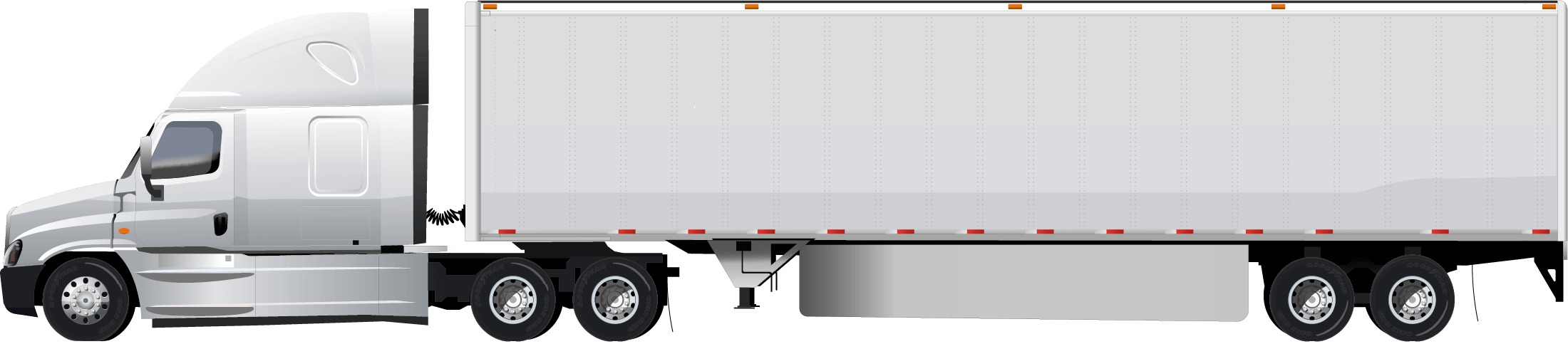
A 53-foot dry van is an enclosed semi-trailer pulled by a highway tractor and used for freight that does not require temperature control. "Dry" distinguishes it from a refrigerated trailer, or reefer; it does not describe the cargo so much as the absence of a cooling unit. The trailer is a sealed rectangular box with a fixed roof, solid walls, and rear doors that open at dock height, most commonly hinged swing doors though roll-up configurations exist.
Standard trailers in this class are approximately 53 feet long and roughly 8.5 feet wide, with interior heights around nine feet in common builds. Cubic capacity generally falls in the range of 3,500 to 4,000 cubic feet depending on the trailer, and payload is typically in the low-to-mid 40,000-pound range once tractor weight and federal gross limits are accounted for. Exact figures vary by trailer construction, tractor configuration, and axle setup, so any load approaching the limits should be planned against the specific equipment assigned.
Pallet capacity is where the trailer's scale becomes concrete. A 53-foot van commonly accommodates somewhere in the range of 26 to 30 standard 48-by-40-inch pallets loaded on the floor, with the exact count depending on pallet orientation and how the load is arranged. Loading patterns matter: pallets can be loaded straight for speed, turned to make fuller use of the trailer's width, or pinwheeled to accommodate mixed dimensions. Double-stacking increases capacity further when freight and weight limits allow.
The trailer sits at the top of the standard equipment ladder. Cargo vans, box trucks, and straight trucks each serve a band of shipment sizes below it; the 53-foot van is where full truckload freight lives. FullTruckload.com works with dry van capacity across the country and matches shipments to trailers based on cubic requirements, weight, lane, and delivery schedule.
Request a Quote Now
Add your shipment details below, and one of our professional expeditors will contact you within minutes. For immediate assistance on an urgent quote, call (800) 373-2480 with these details handy.
Dry vans offer secure transportation for a wide range of goods.

Cargo capacity up to 45,000 pounds of freight.
Dry vans excel in medium and long-distance transportation due to their capacity and speed.

Floor is at loading dock level and swing rear doors must be opened.
53 Ft Dry Van Cargo Capacity
A 53ft dry van can carry up to 45,000 pounds of freight. It's uncommon for this to be the constraint on cargo capacity though. More often loads "cube out" first, meaning they use all the available volume.
That volume is around 4,054 cubic feet, based on the standard dry van interior dimensions of 102" width, 108" height, and length of 53'. How well this volume is utilized depends on the type of freight, whether it's secured to a pallet, and if so, the dimensions of the pallets being used.
TYPES OF CARGO
The types of cargo moved by dry van include:
FullTruckload.com: Full Truckload Dry Van Capacity, Coast to Coast
KEY BENEFITS
The 53-foot dry van is the most widely deployed trailer in the country, which means capacity exists nearly everywhere.
But locating an available trailer with a tractor and driver in position for a specific pickup is another matter. FullTruckload.com works across a nationwide carrier network to source dry van capacity close to the origin, including in markets where trailers are tight. On lanes with imbalanced freight flows, having access to a broad pool is often the difference between loading on schedule and waiting for the market to turn.
EXPLORE OUR COVERAGEEach truckload shipment is handled by one dedicated logistics professional who acts as your single point of contact (SPOC).
That coordinator builds the transportation plan, secures the trailer, sets loading and receiving appointments, tracks the run, and manages exceptions. Truckload freight often involves scheduled dock windows, detention considerations, and multi-day transit, and having one person who holds the full picture keeps those details from falling between shifts or departments.
MEET THE TEAM
Loading a 53-foot van well is a discipline of its own.
Weight has to be distributed so that neither the drive axles nor the trailer tandems exceed federal limits, which sometimes means positioning heavy pallets away from the nose even when it complicates unloading. Floor space has to be planned against pallet dimensions, since a turned or pinwheeled pattern can fit freight that a straight load cannot. Freight that will not fill the trailer needs blocking, bracing, or load bars so it does not shift into empty space. Our team reviews pallet counts, dimensions, stackability, weight per unit, and dock capability at both ends, then plans the load and the equipment together rather than treating them as separate decisions.
VIEW ALL SERVICES
Truckload shipments frequently carry inventory that a receiving operation has already scheduled labor and dock time around, so an unexpected delay has downstream consequences.
FullTruckload.com pairs real-time GPS tracking with proactive communication from the coordinator assigned to the load. Progress is monitored across the full run, updates go out as the shipment advances toward its appointment, and issues such as weather closures, congestion, or shifted receiving hours are raised early enough to adjust plans on both ends.
LEARN MORERange and Routes
Dry vans and semi-trailers are intended for long-distance transportation. Their restricted maneuverability limits their use in urban areas, and they can be too tall for low bridges. In addition, if fully loaded, they may exceed weight limits for traversing bridges on country roads.
A further constraint is the need to load and unload from the rear. This requires reversing up to a loading dock, which is something even the most skilled drivers need a lot of space for. Consequently, dry vans are used mostly for movements between warehouses, distribution centers, and other locations that can make space and a dock available.
Maximum range for a dry van is essentially unlimited. When using a semi-tractor with a sleeper cab and a driver team, these vehicles can go almost 2,000 miles between refueling and traverse the continent in just a few days.
End to End Solutions
Despite their limitations, dry vans offer unmatched capacity and security for a wide range of goods, making them one of the most common methods of freight transportation. Their fully enclosed trailers protect shipments from weather, dust, and theft, making them ideal for non-perishable goods, packaged products, and high-value cargo. This added layer of protection is particularly beneficial for industries like retail, electronics, and consumer goods, where product integrity is essential. Additionally, dry vans can be sealed to ensure shipments remain tamper-proof throughout long-distance journeys, further enhancing security.
Dry vans are also highly cost-effective, especially for full truckload (FTL) and less-than-truckload (LTL) shipments. They provide a standardized method of transportation, simplifying logistics and reducing the risk of damage from excessive handling. Modern dry vans are often equipped with tracking technology and temperature monitoring systems, allowing shippers to monitor their cargo in real-time and ensure it arrives at the right destination on schedule. With their combination of range, capacity, and protective features, dry vans remain a cornerstone of supply chain logistics, helping businesses move goods across the country reliably and efficiently.
KEY VEHICLE SPECIFICATIONS
Maximum payload
Up to 45,000 pounds.
Suspension
Most modern dry vans use air suspension to cushion freight against impacts.
Maximum interior dimensions
Width: 102", height: 108", length: 53'. Sufficient for two rows of 12 standard pallets and up to 30 pallets if their design allows turning.
Floor rating (the maximum weight the front wheels of a fork truck can apply)
Typically 22,000 pounds, some dry vans have higher ratings.
Loading
Floor is at loading dock level. Swing rear doors must be opened before closing the distance to the dock.
Customer Reviews
551 Reviews
Trusted by Businesses Nationwide
See customer feedback about our service, communication, and expedited shipping support.
G Rated by customers on Google
Your Time-Sensitive Cargo Needs a Dedicated Freight Team
53' Dry Van Advantages
Capabilities
A dry van is a sturdy, enclosed trailer, typically white, designed to be towed by a heavy-duty truck or semi-tractor. It connects to the tractor unit via a fifth-wheel coupling—a slanted flange plate that securely locks onto the kingpin located beneath the front of the trailer. This setup allows for easy maneuvering and enables the tractor to detach from the trailer, facilitating efficient loading and unloading operations. The dry van’s design makes it an essential tool for transporting goods securely, protecting cargo from external elements like weather and debris. Its versatility allows it to accommodate a wide range of freight, from packaged consumer goods to industrial materials.
Capacity
With 53' of interior length, the dry van provides the most enclosed cargo volume of any standard road vehicle in use in North America. Many thousands are at work every day, traversing interstate highways and major roads while laden with anything from automotive or machine parts to electronic components and packaging materials. Most modern dry vans incorporate air suspension technology. This provides better shock absorption than leaf springs, which helps ensure delicate items arrive undamaged. These innovations, combined with their versatility and capacity, make dry vans a backbone of the freight industry, capable of handling a diverse range of cargo reliably and efficiently.

Transport
Dry vans excel in medium and long-distance transportation due to their capacity, efficiency, and speed, making them the go-to choice for intercity or interstate freight movement. Dry vans operate mostly between hubs or nodes where ample space exists for maneuvering, and factories, warehouses and distribution centers. Their size makes them a poor fit for city streets, and they are almost never deployed in "last mile" delivery roles. Where they are unmatched though, is in medium and long distance transportation. In these roles they are the fastest way of moving freight between two points.

Loading
Dry vans primarily transport palletized freight, as pallets make loading and unloading more efficient, typically using forklifts. Due to their length, alternative loading methods are often impractical. Despite their lightweight construction—designed to maximize payload capacity—dry vans are built with durable hardwood floors capable of withstanding the heavy weight and pressure of forklifts during loading operations. This combination of lightweight materials and robust flooring ensures they can handle demanding freight tasks while optimizing the load capacity for maximum efficiency.

Safety
The solid, enclosed structure of dry vans also provides excellent protection for the freight, keeping it safe from weather, dust, and other external factors during transit. This makes them ideal for transporting a wide range of goods, including retail merchandise, packaged foods, and industrial materials. Additionally, their standardized design allows them to integrate seamlessly into most supply chain operations, fitting well with loading docks and various logistics systems. This versatility, coupled with their ability to handle high-capacity loads efficiently, makes dry vans one of the most commonly used trailers in the freight industry.
Tracking Technology
To minimize delays and ensure on-time delivery, the dry vans we use are equipped with tracking technology. This lets our people monitor a truck's progress throughout its journey and provide the driver with rerouting instructions in case of bad weather or road congestion. The other benefit is that our clients can receive regular updates, enabling them to plan activities like equipment installation and production line startup. This level of communication is especially valuable for time-sensitive shipments, where precise coordination is critical. Moreover, it allows for proactive problem-solving, such as adjusting schedules or dispatching additional resources if unexpected delays occur.

Industries That Rely on Dry Vans
Oil & Gas
Energy operations move substantial volumes of routine palletized supply: drilling fluids and additives in drums and totes, packaged proppant, filtration media, safety stock, and crated valve inventory bound for supply yards. A 53-foot dry van consolidates a full replenishment order into one enclosed load, keeping packaged chemicals dry across long runs to remote basins.

Technology
Hardware manufacturers and distributors ship in trailer quantities when a product launch, channel restock, or large deployment is involved. Dry van trucking moves palletized servers, storage arrays, networking equipment, and finished consumer electronics between plants, distribution centers, and integration facilities, where the sealed trailer provides weather protection and a meaningful security barrier.

Automotive
Assembly operations consume packaged components by the trailerload. Full truckload dry vans carry returnable racking, sequenced parts, interior trim, fasteners, filters, batteries, and aftermarket inventory between suppliers, sequencing centers, plants, and parts distribution networks. Dock-to-dock loading suits automotive facilities, which are almost universally built for trailer receiving and forklift handling.

Construction
Not all construction freight belongs on an open deck. Enclosed trailers carry packaged drywall and insulation, flooring, cabinetry, roofing materials, fixtures, and palletized adhesives to distribution yards and large project sites. Weather protection is the deciding factor — finish materials that rain would ruin on a flatbed ride safely in a sealed van.

Manufacturing
Plants operating at volume order raw materials and packaging in truckload quantities: resin in bags or gaylords, sheet and coil stock in crates, castings, labeling supplies, and finished goods heading to distribution. A 53-foot van handles the full lot in one enclosed movement, keeping a production input off a consolidation network's schedule.

Aerospace & Defense
Large structural assemblies, tooling, and program inventory frequently require enclosed transport in trailer quantities. Dry vans carry crated subassemblies, ground support equipment, spares packages, and shipments moving between manufacturing sites, depots, and government facilities. Exclusive use of a sealed trailer limits handling exposure and supports the chain-of-custody expectations attached to controlled and high-value cargo.
Machinery
Equipment manufacturers ship both complete machines and the parts inventory supporting them. Palletized components, crated assemblies, packaged spares, and machines small enough to fit trailer dimensions all move well in a 53-foot van, where the enclosed environment protects machined surfaces and electronic controls from road spray and salt.

Mining
Operations far from supply centers order in bulk to reduce trip frequency. Dry van trucking delivers palletized wear parts, screen media, drill consumables, packaged reagents, and lubricants to mine sites and processing facilities in single consolidated loads, with enclosed transport keeping packaging intact across hundreds of miles of unpaved access road.

Telecommunications
Network deployment programs stage equipment in volume before crews mobilize. Full truckload dry vans move cabinets, racks, batteries, fiber reels, antennas, mounting hardware, and cable in trailer quantities to regional warehouses and staging yards, where the enclosed trailer protects sensitive electronics and the trailer's capacity matches the scale of a multi-site build-out.
Ground Transportation and Expedited Trucking Services
Expedited Trucking Excellence: Explore Our Resource and Blog Section
FullTruckload.com is a leader in the expedited trucking industry. Our blog and resource section offers information and resources to improve your logistics strategy.
The Right Capacity Is Key to Every Urgent Shipment
Your urgent shipment will be the only freight in the Sprinter van, box truck, straight truck, 53’ dry van, or full flatbed to minimize damage and ensure the shipment goes direct from pickup to delivery.
53' DRY VAN
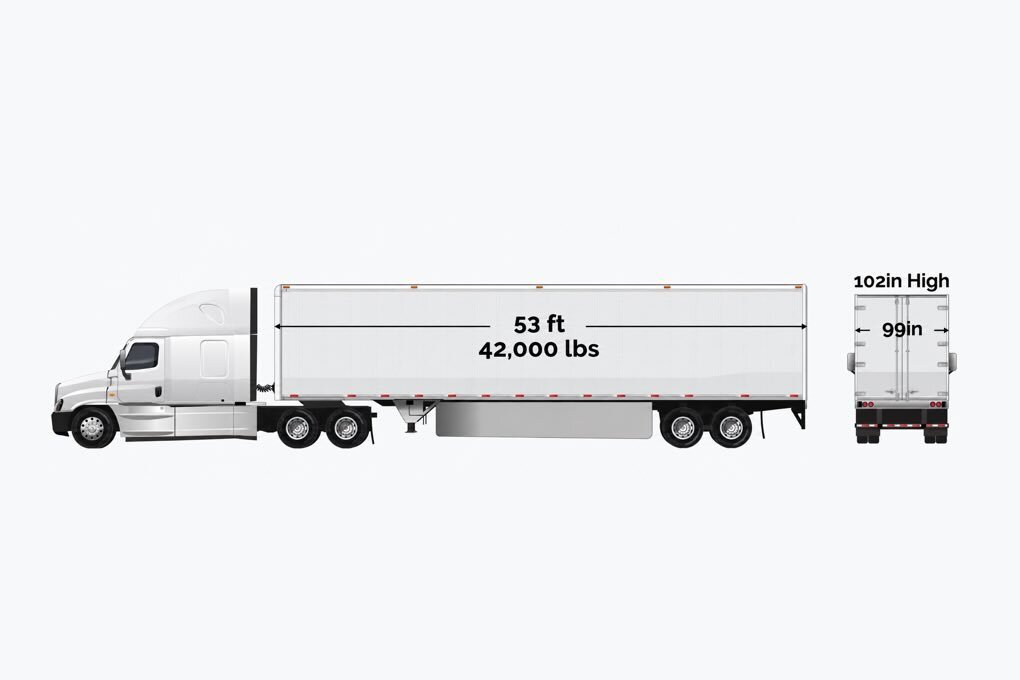
Our premium network of 53-ft dry vans can carry loads up to 42,000 pounds. Measuring 53’ x 99” x 102”, these carefully-vetted vehicles will ensure your time-sensitive freight arrives at its destination safely.
#1
5/5
50000
24/7
SPRINTER VAN
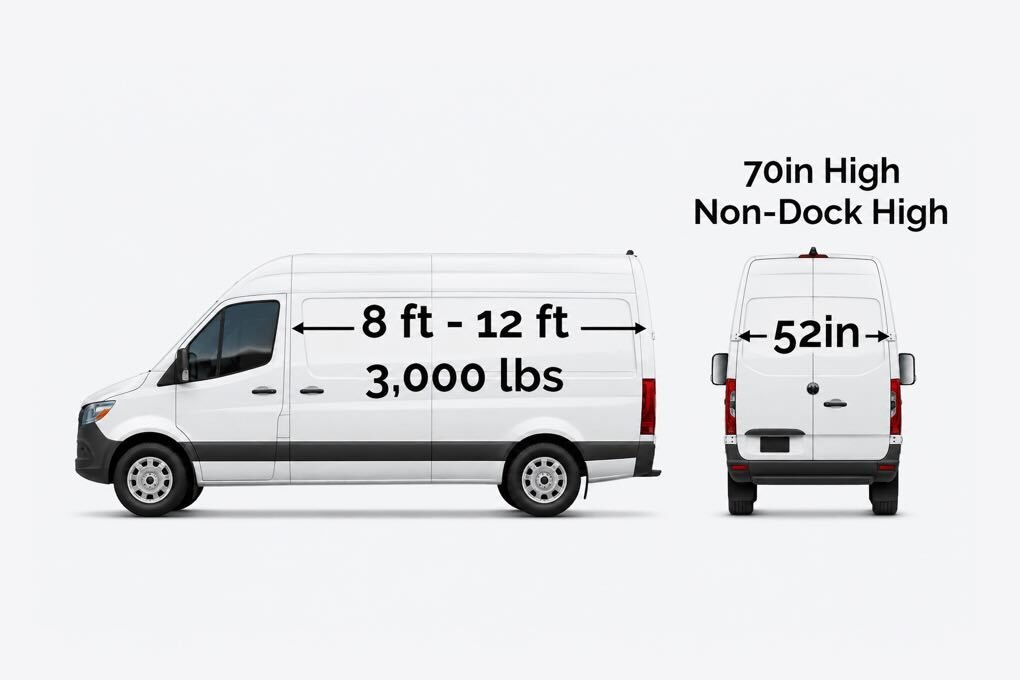
FullTruckload.com's network of expedited Sprinter vans have the capacity to meet your local, regional, or long-distance ground shipping needs. Measuring 8-12’ x 52” x 70", our carefully-selected vans have the capacity to carry loads up to 3,000 lbs.
#1
5/5
50000
24/7
BOX TRUCK
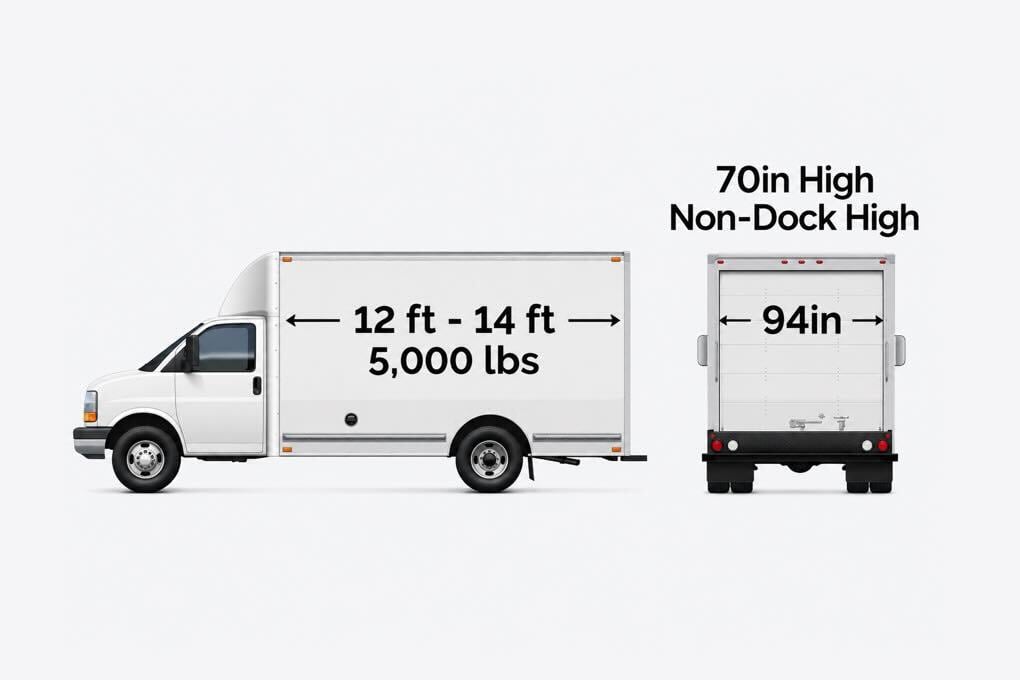
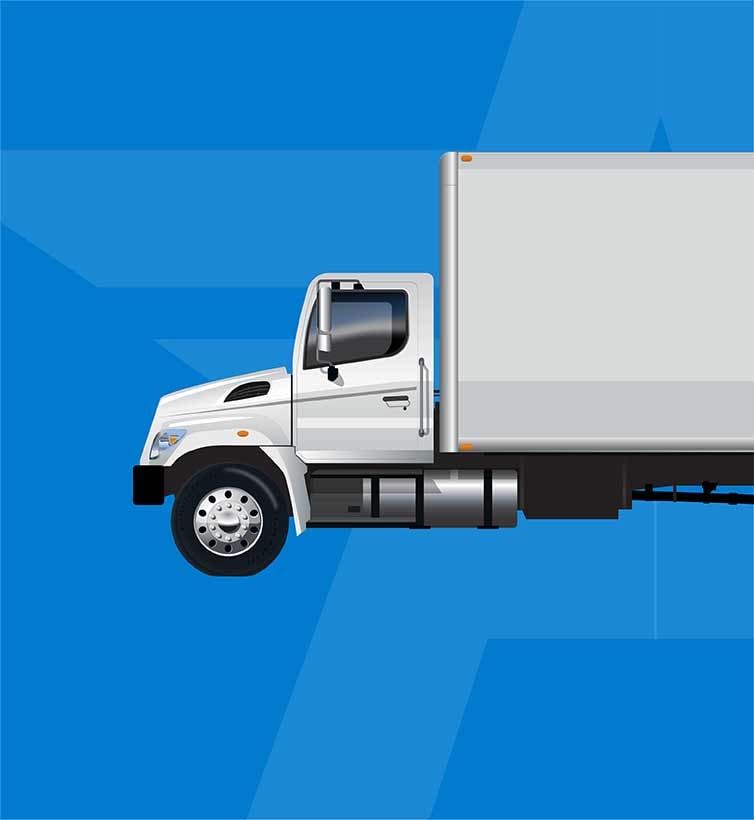
We pride ourselves in working with trusted partners that offer carefully-vetted box trucks, from lift-gate service to varying sizes that accommodate smaller loads. Box trucks, or small straight trucks, measure 12-16’ x 94” x 70” and have the capacity to carry up to 5,000 pounds.
#1
5/5
50000
24/7
STRAIGHT TRUCK
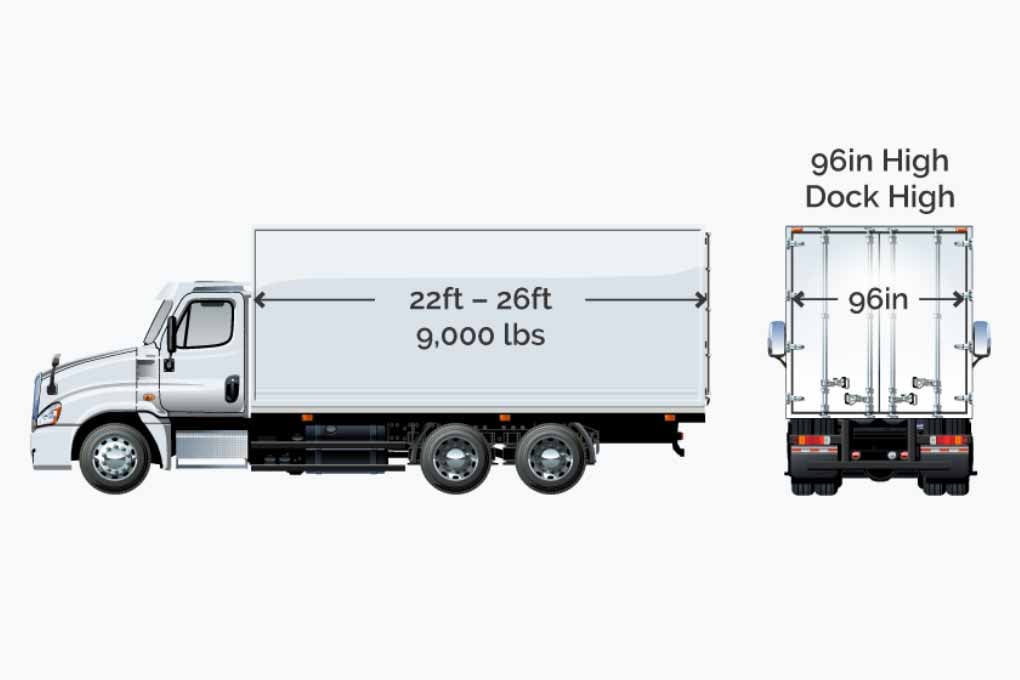
Measuring 22-26’ x 96” x 96”, straight trucks can carry loads up to 9,000 pounds. Large straight truck services offer focused logistics, professional drivers, and deeply-experienced expeditors to get your delivery where it needs to go.
#1
5/5
50000
24/7
FULL FLATBED
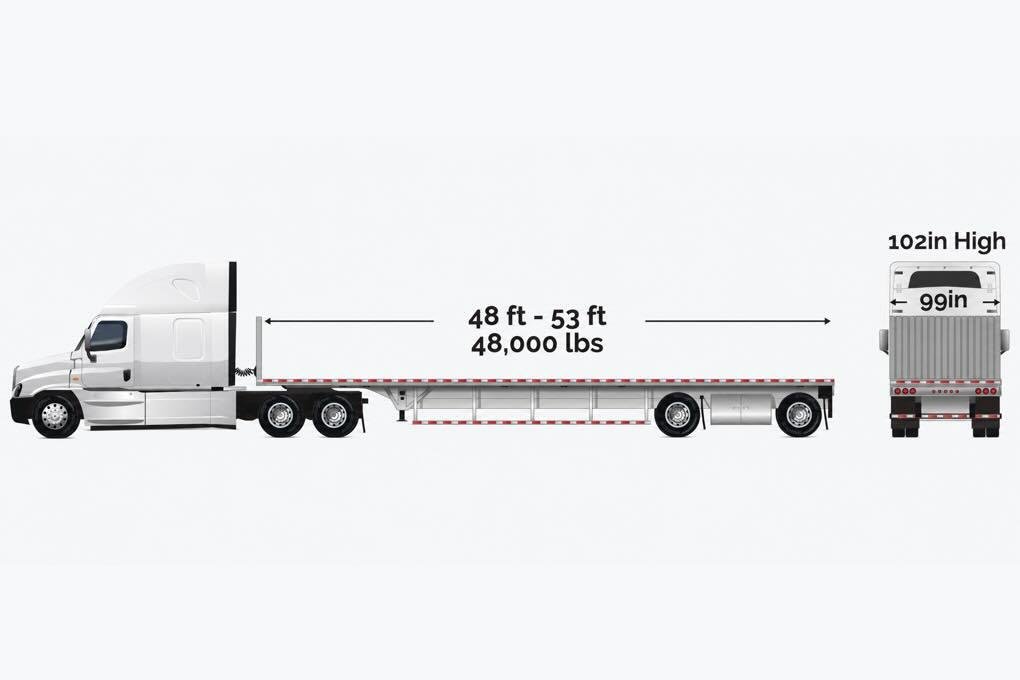
FullTruckload.com's network of full flat bed vehicles can accommodate wide or mega-size loads, such as specialized equipment machinery of all weights and sizes. Measuring 48-53’ x 102” x 102”, full flat bed vehicles can carry freight of up to 48,000 pounds.
#1
5/5
50000
24/7
HOT SHOT TRUCK
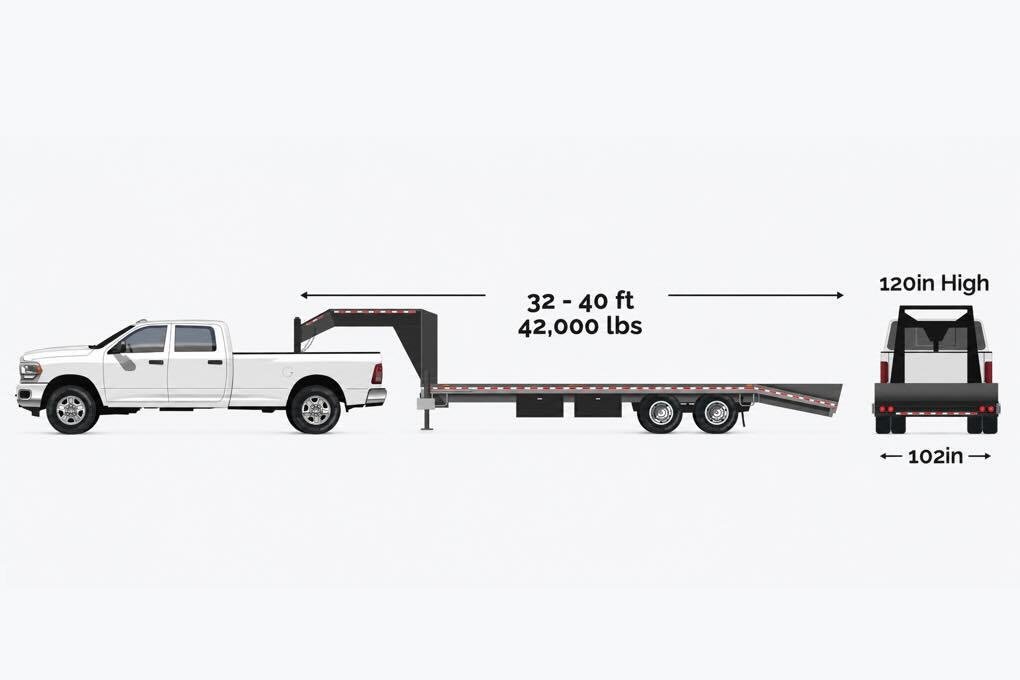
We'll happily arrange for your freight to be transported via hot shot trucking services. We've proudly partnered with hot shot trucking providers across North America to give you access to carefully-vetted ground delivery vehicles for your time-critical freight.
#1
5/5
50000
24/7
Frequently Asked Questions About Dry Van Shipping
What is a 53-foot dry van?
A 53-foot dry van is an enclosed semi-trailer, approximately 53 feet long, used to haul freight that does not require refrigeration. It has solid walls, a fixed roof, a wood or composite floor, and rear doors that align with a standard warehouse dock. Pulled by a highway tractor, it is the standard equipment for full truckload freight in North America.
The "dry" designation simply means the trailer has no temperature-control unit. It can carry an enormous range of goods — palletized consumer products, industrial components, packaged materials, crated equipment — as long as they tolerate ambient temperatures. Its ubiquity is itself an advantage: nearly every distribution facility, plant, and warehouse in the country is built to load and receive one.
What is dry van trucking?
Dry van trucking is the segment of the freight industry that moves goods in enclosed, non-refrigerated trailers. It represents the largest share of truckload transportation, and most general commercial freight in North America travels this way at some point.
The service model is straightforward: a trailer is spotted or backed to a dock, loaded with one customer's freight, closed and often sealed, driven to the destination, and unloaded at another dock. Because the freight is enclosed and dedicated, it is protected from weather and handling throughout. Dry van trucking covers regional runs of a few hundred miles and coast-to-coast lanes alike, with transit time determined mainly by distance and driver hours-of-service limits.
What is an FTL shipment?
An FTL, or full truckload, shipment is freight that occupies an entire truck. That can mean the load physically fills the trailer's space or weight capacity, or that the shipper has chosen to buy the whole trailer even if some capacity goes unused. Either way, no other customer's freight rides along.
The defining characteristics are direct routing and single handling. The trailer goes from the shipper's dock to the consignee's dock without terminal stops, and the freight is loaded once and unloaded once. That produces faster and more predictable transit than shared-network service, along with lower risk of damage and loss. FTL is the standard approach for shipments above roughly ten to twelve pallets, for high-value goods, and for freight that has to arrive on a fixed schedule.
What is LTL vs. FTL shipping?
Less-than-truckload shipping pools freight from multiple shippers onto shared trailers. Each shipment travels to a terminal, gets unloaded and sorted, moves onward on another trailer, and may repeat that process before reaching its destination. Costs are shared, which makes LTL economical for shipments of roughly one to six pallets.
Full truckload shipping dedicates a trailer to one customer. There is no sorting, no terminal network, and no waiting for a trailer to fill. Transit is faster and more consistent, and the reduced handling substantially lowers damage exposure. The trade-off is that the shipper pays for the full trailer. The crossover point varies by lane and freight class, but shipments in the range of ten or more pallets, or those with tight delivery requirements, generally favor truckload.
How many pallets fit in a 53-foot dry van?
A 53-foot dry van typically accommodates somewhere in the range of 26 to 30 standard 48-by-40-inch pallets on the floor, depending on how they are oriented. Loaded straight, with the 48-inch side running lengthwise, the count tends toward the lower end because a gap remains along the trailer's width. Turned or pinwheeled patterns use that width more efficiently and can raise the count.
Double-stacking can nearly double floor capacity, but only when the freight is stackable, the packaging supports weight on top, and total weight stays legal. Non-standard pallet sizes change the arithmetic entirely. Because cubic space and weight apply at once, actual pallet dimensions and weights give a far more reliable answer.
How much weight can a 53-foot dry van carry?
Payload for a standard dry van is generally in the low-to-mid 40,000-pound range, though the precise figure depends on the weight of the tractor and trailer, the axle configuration, and applicable state limits. The governing constraint in most of the United States is the 80,000-pound federal gross vehicle weight limit for a five-axle combination on the interstate system, which sets the ceiling for tractor, trailer, fuel, and cargo combined.
Total weight is not the only limit. Freight must also be positioned so that individual axle groups stay within their own legal maximums, which is why heavy loads require deliberate placement rather than simply loading front to back. Lighter tractors and specialized configurations can increase available payload, so loads near the ceiling should be planned against the specific equipment assigned.
What is the difference between a dry van and a refrigerated trailer?
A dry van has no temperature-control system; a refrigerated trailer, commonly called a reefer, includes an insulated body and a mechanical unit that maintains a set temperature range. Externally the two look similar, but the reefer's insulation reduces its interior dimensions and its refrigeration unit adds weight, so a reefer generally carries somewhat less cargo than a dry van of the same nominal length.
The choice is dictated by the freight. Perishables, pharmaceuticals, certain chemicals, and anything with a defined temperature requirement need a reefer. Everything else ships more economically in a dry van. Worth noting: a dry van's interior can reach extreme temperatures in summer or winter, so products with even loose temperature sensitivity should be evaluated first.
What is the difference between a dry van and a box truck?
Both are enclosed cargo spaces, but they belong to different vehicle classes. A dry van is a detachable semi-trailer pulled by a separate tractor; it can be dropped at a dock, pre-loaded, and picked up later. A box truck is a single unit whose cargo body is fixed to the same frame as the cab and cannot be separated.
Scale and access differ accordingly. A 53-foot dry van carries several times the freight of a box truck at a lower cost per pound, but it needs substantial room to maneuver and generally requires docks at both ends. A box truck carries less, reaches locations a combination vehicle cannot serve, and can be equipped with a liftgate. The right choice depends on shipment size and loading conditions at each stop.
What freight ships best in a 53-foot dry van?
Palletized and packaged goods are the natural fit: cartons, cases, drums, bagged materials, crated equipment, and anything that can be secured on a pallet and handled by forklift. Freight that benefits from weather protection and from being out of public view also belongs in an enclosed trailer, which is why high-value consumer goods and electronics ship this way.
Freight that fits poorly includes anything requiring temperature control, loads too tall or wide for the trailer's interior, and equipment that must be loaded by crane or driven on, which calls for an open deck instead. Very heavy compact loads can also exhaust the weight limit while leaving most of the trailer empty, in which case a different equipment strategy may be more efficient.
What is a dedicated truckload?
A dedicated truckload is trailer capacity committed to a single customer rather than sourced load by load from the open market. In its simplest form, that means one shipment moving on its own trailer. In a contracted arrangement, it means equipment and drivers assigned to a shipper's lanes over a sustained period.
Shippers pursue dedicated capacity for consistency. Rates and availability become more predictable than they are in a spot market that swings with seasonal demand, drivers grow familiar with the facilities and their procedures, and equipment can be specified to the freight. For operations where a missed pickup disrupts production or store replenishment, that reliability often outweighs the cost of committing to capacity in advance.
What is expedited truckload shipping?
Expedited truckload shipping applies urgency to full truckload freight. A trailer is sourced and dispatched as quickly as capacity allows, and the load runs directly to its destination with routing built around the delivery deadline rather than around network efficiency.
The primary lever on a long lane is driver hours. A solo driver must take federally mandated rest, which caps daily distance; assigning team drivers allows the truck to keep moving and can substantially compress cross-country transit. Other levers include sourcing equipment already positioned near the origin and arranging after-hours loading or receiving. Because outcomes depend on lane, equipment availability, weather, and facility hours, timing is established for each shipment rather than promised generically.
How is 53 ft dry van freight secured in transit?
Freight in a 53 ft dry van is typically secured using load bars, straps, edge protectors, and blocking and bracing materials to prevent shifting during transit. Palletized freight is usually stretch-wrapped before loading. Shippers are responsible for proper packaging, while carriers are responsible for appropriate securement once freight is loaded. FullTruckload.com works with drivers who follow DOT cargo securement regulations to protect your shipment from origin to destination.
What is the standard length of a dry van trailer, and why is 53 ft the most common size?
The 53 ft dry van is the longest trailer permitted on most US interstate highways, making it the dominant standard for full truckload freight. Its length maximizes cargo volume per trip, which reduces per-unit shipping costs and minimizes the number of moves required to clear a shipment. Shorter trailers such as 48 ft units are still in use but have largely been displaced by the 53 ft configuration across major freight lanes.
How do I book a 53 ft dry van for an expedited shipment?
Contact FullTruckload.com directly with your origin, destination, freight dimensions, weight, and required delivery window. A dedicated logistics coordinator will confirm available 53 ft dry van capacity, provide routing options, and arrange dispatch, often within hours. 24/7 availability means urgent bookings are handled around the clock without waiting for standard business hours.
What is the difference between a 53 ft dry van and a 48 ft dry van for full truckload shipping?
A 53 ft dry van provides roughly 10 percent more interior length than a 48 ft trailer, translating to additional pallet positions and greater cubic capacity. For most US shippers, the 53 ft trailer is the default choice because it is compatible with the majority of distribution centers and loading docks nationwide. The 48 ft unit is occasionally preferred where dock length or local permit restrictions apply.