
Skip to content

Large Straight Trucks

More freight, same urgency - straight trucks provide the capacity and flexibility to move larger time-critical loads without slowing you down.
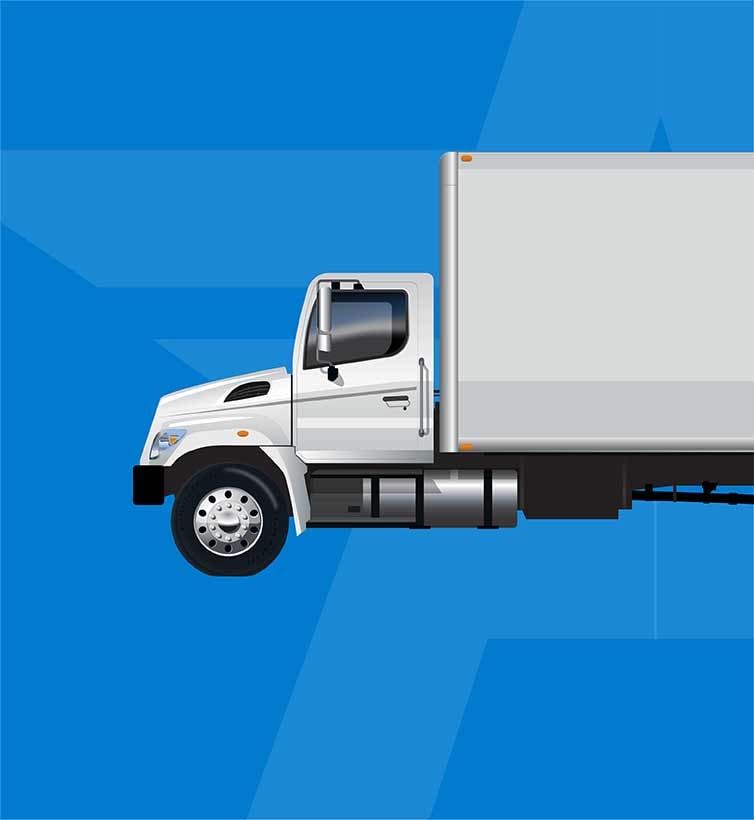
hero-straight-truck

EXPEDITED DELIVERY SOLUTIONS

What Are Straight Trucks?

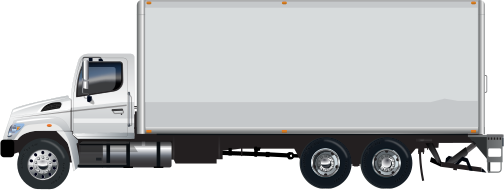
A straight truck is any commercial vehicle whose cargo area is permanently mounted to the same frame as the cab. The name refers to that architecture: the vehicle runs in one straight line from bumper to rear door, with no articulation point and no trailer to uncouple. Tractor-trailers, by contrast, separate into a power unit and a detachable trailer, which is why the two categories behave so differently on the road and at a receiving facility.

The category is best understood as a spectrum rather than a single vehicle. Smaller straight trucks — commonly built with cargo bodies in the 12- to 16-foot range — handle a modest number of pallets and stay easy to route through congested areas. Large straight trucks, generally in the 22- to 26-foot range, offer substantially more floor space, taller interiors, and heavier payload ratings, and most are built to sit at or near standard dock height. Interior dimensions, weight ratings, and door configurations vary by chassis and body manufacturer, so the specifications of the assigned vehicle should always govern load planning.

Most straight trucks used in freight service carry an enclosed body, which is where the overlapping term "box truck" comes from. Others are configured with flatbeds, stake sides, refrigerated units, or specialty bodies. Optional equipment shapes what a truck can practically do: liftgates enable ground-level pickup and delivery, e-track and load bars secure freight against shifting, and air-ride suspension smooths the ride for equipment and electronics sensitive to vibration.

FullTruckload.com coordinates straight truck capacity nationwide and treats vehicle selection as part of the transportation plan rather than an afterthought. A load of eight pallets bound for a plant with a dock has different requirements than the same weight of freight going to a retail address with no lift equipment, and the right body length, deck height, and gate configuration change accordingly.

Request a Quote Now

Add your shipment details below, and one of our professional expeditors will contact you within minutes. For immediate assistance on an urgent quote, call (800) 373-2480 with these details handy.

icon-box-truck

Suited for hauling substantial loads while maintaining ability to navigate tighter spaces.

Cargo-1

Cargo capacity 10-12 pallets, maximum payload 10,000–15,000 lbs.

In flight tracking

Ideal for high priority shipping of larger freight items.

Hub to spoke

Floor height aligns with standard loading docks for easy manual loading.

Large Straight Truck Cargo Capacity

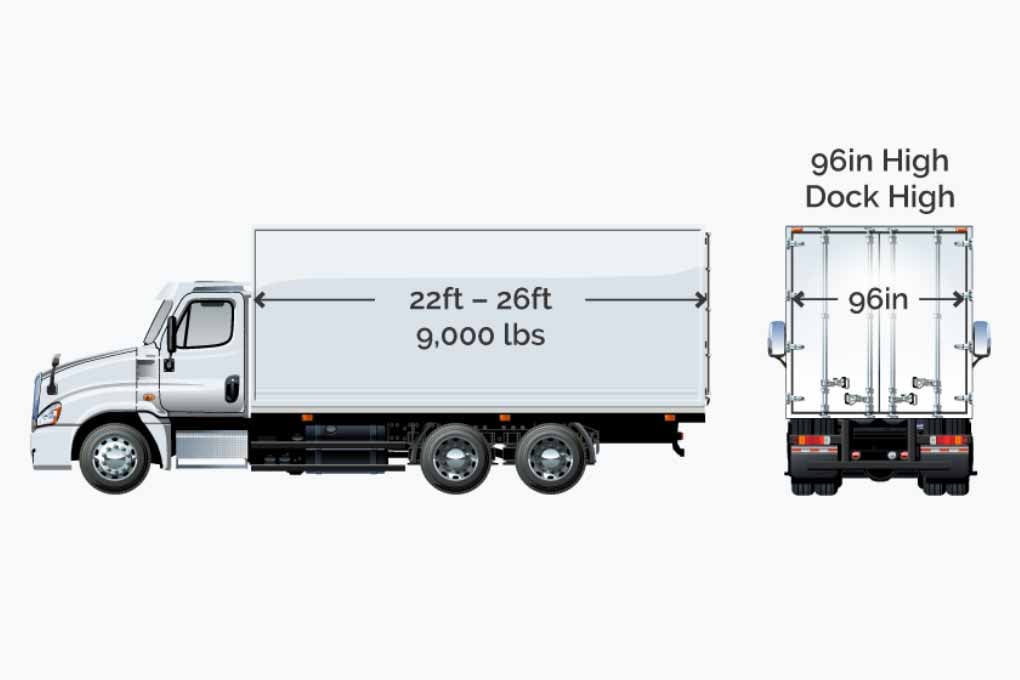
The inside of a straight truck is 96” wide and 96” high, which makes it just big enough to take two rows of pallets. The shortest trucks, which provide 22’ of cargo capacity, will take a line of five pallets, (for a total of 10), while the longest (26’) will take 12 pallets.

Two important considerations are payload and loading method. Payload is complicated by the 26,000 pound Gross Vehicle Weight Rating (GVWR) cutoff from non-CDL to CDL (Commercial Driver’s License). A non-CDL straight truck is therefore restricted to a maximum total weight of 26,000 pounds, but with a CDL operator, can go to 54,000 pounds.

TYPES OF CARGO

Pallets aren’t the only type of freight these trucks can carry. With tie-downs and cargo nets to keep items secure, they’re incredibly versatile cargo-carriers.

Checkmark
Loads can include manufacturing and test equipment, laboratory equipment, display stands and presentation systems, and even the gear sports teams need when they’re on the road.
Checkmark
Whether it’s in cartons, plastic cases, wheeled bins, or dedicated cradles, if it fits, a straight truck can carry it.
Checkmark
While the floor is at dock height, straight trucks can be loaded via a ramp. Some straight trucks are equipped with a liftgate for easy loading.

FullTruckload.com: Straight Truck Capacity Sized to the Shipment

KEY BENEFITS

NATIONWIDE NETWORK
SINGLE POINT OF CONTACT
DEDICATED EXPERTISE
REAL-TIME TRACKING

Straight trucks are among the most widely deployed vehicles in commercial trucking, and that density works in a shipper's favor.

FullTruckload.com taps carrier capacity across the country to find suitable equipment near the origin, which shortens the time between booking and loading. The breadth of the network also allows for genuine size matching: a load that needs 20 feet of floor does not have to accept a 16-foot body and a second trip, and one that fits comfortably in a small straight truck does not have to pay for capacity it will never use.

EXPLORE OUR COVERAGE

ft-coverage

Range and Routes

Diesel-engined straight trucks, which most are, typically average 8 to 12 mpg and carry tanks of up to 150 gallon capacity. Depending on the type of driving they’re being used for, (highway, urban, rural roads), they can go up to 1,200 miles before refueling.

Many straight trucks are used for “last mile” deliveries, where freight is offloaded from a semi-trailer for local delivery in a congested urban or metropolitan area. However, they are just as well-suited to long-distance transportation, meaning inter-state, coast-to-coast, and even international. When using a straight truck with a sleeper cab, a driver team can cross the country in remarkable speed.

Another useful feature of the straight truck is that a lower GVWR, and a lower overall height than a semi-trailer, means they can often take more direct routes, crossing weight-limited bridges and going under low bridges.


End to End Solutions

These trucks are particularly beneficial for businesses requiring direct delivery of medium to large-sized shipments, reducing the risk of damage and delays. By integrating real-time tracking, optimized routing, and dedicated freight services, companies can enhance supply chain visibility and reliability. Large straight trucks also enable just-in-time delivery strategies, allowing businesses to minimize storage costs and keep inventory moving efficiently.

Additionally, utilizing large straight trucks in end-to-end logistics improves flexibility and scalability for businesses in industries such as retail, healthcare, and manufacturing. Their ability to access both urban and suburban areas makes them ideal for last-mile delivery and regional distribution.

Many providers offer value-added services, such as temperature-controlled transportation, specialized handling for fragile goods, and expedited shipping options. By leveraging these trucks in a comprehensive logistics strategy, businesses can streamline operations, improve customer satisfaction, and achieve cost-effective transportation solutions tailored to their needs.

KEY VEHICLE SPECIFICATIONS

Maximum payload

Up to 26,000 pounds without a CDL driver, and with a CDL, up to 54,000 pounds.

Maximum cargo dimensions

Width: 96”, height: 96”, length: 22 to 26’. Generally sufficient for two rows of 6 standard pallets.

Floor is at loading dock level

Some straight trucks have a ramp or liftgate. Note that most straight truck floors will NOT accommodate a fork truck (and fork trucks are generally too tall to enter a truck anyway).

Range

Depends on engine, fuel, and fuel tank capacity, but can be up to 1,200 miles between refueling stops.

REQUEST A QUOTE

Reach out today and let's solve your urgent shipping needs.

CONTACT US

Customer Reviews

5.0 / 5

551 Reviews

Trusted by Businesses Nationwide

See customer feedback about our service, communication, and expedited shipping support.

Rated by customers on Google

Your Time-Sensitive Cargo Needs a Dedicated Freight Team

Expedited Trucking

Large Straight Truck Advantages

Large straight trucks offer significant advantages for expedited freight, especially when transporting medium to large-sized loads. Their spacious cargo areas accommodate heavier and bulkier shipments, making them ideal for industries requiring rapid delivery of substantial goods.
Ground Transportation-1-1

Capabilities

A large straight truck is built on a rigid frame, with a solid-sided, rectangular cargo area positioned directly behind the driver’s cab. Designed for efficiency and versatility, these trucks typically come in two-axle and three-axle models, with the third axle allowing for greater payloads. Offering about twice the capacity of a box truck but only half that of a semi-trailer, they strike an ideal balance between cargo volume and maneuverability. This makes large straight trucks well-suited for hauling substantial loads while maintaining the ability to navigate tighter spaces.

Long Distance Service

Long Distance Service

In long-distance service, a straight truck is often faster than a semi. Being smaller and lighter, they can take more direct routes that use and pass under bridges with weight limits and height restrictions. They also have better maneuverability and gas mileage than semi-trucks, while being substantially larger than box trucks and Sprinter vans. For businesses requiring a balance between capacity, speed, and flexibility, large straight trucks are an ideal choice for long-distance and expedited freight needs.

Versatility

Versatility

Large straight trucks are as effective in long-distance transportation as they are for use in densely populated urban and metropolitan areas. They are ideal for high priority shipping of larger freight items, or freight requiring multiple pallets or containers. In addition, multiple loading and unloading options make for great versatility. This combination of adaptability and efficiency makes large straight trucks a dependable choice for businesses seeking reliable expedited freight solutions.

SDD Icon

Loading

Large straight trucks are engineered with a floor height that aligns with standard loading docks, facilitating easy manual loading and unloading or use of a pallet truck. However, they are not designed for fork truck loading. Most fork trucks are too tall to fit inside the cargo area, and their weight can exceed the floor’s capacity. Additionally, there is a risk of lifting the front of the truck as the fork truck enters, especially considering that the rear of the truck extends beyond its rear axle. Therefore, it’s important to use proper loading equipment that matches the truck’s design and weight limits.

Safety

Safety

Large straight trucks offer notable safety advantages when shipping expedited freight, ensuring both the protection of goods and the well-being of drivers. Their rigid frame design provides greater stability compared to articulated vehicles, reducing the risk of tipping or jackknifing during sudden maneuvers. Equipped with advanced safety features such as anti-lock braking systems (ABS), stability control, and collision mitigation technology, these trucks enhance driver control and minimize accident risks. The enclosed, solid-sided cargo area shields freight from external elements and potential damage.

Technology

Advanced Tracking Technology

The straight trucks we use are equipped with advanced tracking technology. This lets us monitor their progress and provide the drivers with rerouting instructions to address problems like bad weather or road congestion. It also enables the regular updates that give customers the assurance their delivery will arrive when promised. This combination of advanced technology, safety, and versatility makes our straight truck service a reliable solution for meeting tight deadlines and delivering exceptional customer satisfaction.

Industries That Rely on Straight Trucks

oil-gas-1

Oil & Gas

Supply chains serving drilling programs, midstream facilities, and refineries move freight that is heavy for its footprint. Straight trucks carry skidded pump units, valve assemblies, palletized chemicals, wellhead components, and crated instrumentation from supply yards to field locations, and larger bodies handle tubing bundles and framed skids that will not fit a smaller vehicle.

LEARN MORE

data center

Technology

Enterprise hardware deployments often arrive as a mix of tall racks and palletized accessories. Large straight trucks accommodate full-height server cabinets and network gear that would exceed the interior clearance of smaller vehicles, and dock-height loading lets equipment roll on and off without repeated lifting — a meaningful protection for hardware that is expensive and vibration-sensitive.

LEARN MORE

manufacturing-1

Automotive

Between the parts van and the trailerload sits a large volume of automotive freight: returnable racks, engine and transmission subassemblies, bumper fascias, seat frames, and dunnage moving between suppliers, sequencing centers, and plants. Straight truck delivery covers those quantities on a dedicated basis, and dock-height units turn quickly without tying up trailer space.

Learn More

construction-1

Construction

Contractors ordering by the phase rather than by the trailerload rely on this size class heavily. Straight trucks deliver framing hardware, mechanical and electrical assemblies, scaffolding, formwork, doors and windows, and packaged finishing materials to active sites, where a liftgate-equipped unit unloads without a crane and reaches staging areas a semi cannot approach.

LEARN MORE

retail

Manufacturing

Production support freight rarely arrives in trailer-sized quantities. Straight trucks move tooling, fixtures, molds, palletized raw stock, replacement drives and motors, and packaging supplies between vendors and plants. For manufacturers running just-in-time schedules, a truck sized to the actual order avoids both the delay of waiting for a full trailer and the cost of buying one.

LEARN MORE

aerospace

Aerospace & Defense

Program logistics involve items that are long, awkward, or carefully controlled. Straight trucks transport tooling and jigs, ground support equipment, crated structural components, test stands, and cargo bound for MRO shops and installations. Larger bodies with air-ride suspension and interior tie-down systems support freight where handling exposure and ride quality both need to be limited.
LEARN MORE

Machinery

Machinery

Equipment dealers, rebuilders, and industrial service operations regularly ship machines and major components in the several-thousand-pound range. Straight trucks handle skidded machine tools, gearboxes, compressors, hydraulic power units, and palletized spare parts, and a liftgate rated for the load allows delivery to shops that have no forklift or overhead lifting capability on site.
LEARN MORE

Mining

Mining

Remote operations order in batches that need to arrive complete. Straight trucks carry crusher and conveyor components, screen decks, electrical switchgear, drums of lubricant, and pallets of wear parts to mines and processing plants, where the vehicle's shorter length is an advantage on tight site roads and switchbacks.

LEARN MORE

Telecommunications

Telecommunications

Network builds and restoration work draw on freight that ranges from small hardware to full equipment cabinets. Straight trucks deliver outside-plant materials, generators, battery strings, racks, and fiber reels to central offices, tower sites, and staging yards. Liftgate service is often essential, since equipment shelters and compound gates rarely include dock infrastructure.

LEARN MORE

Ground Transportation and Expedited Trucking Services

Our team of professionals works tirelessly behind the scenes to ensure every shipment arrives on time, and in optimal condition, at its final destination.
We offer the fastest ground and air transportation options for B2B customers across the United States, Mexico, and Canada.
We’re with you along every mile of your journey. Get peace of mind with a dedicated single point of contact.

The Right Capacity Is Key to Every Urgent Shipment

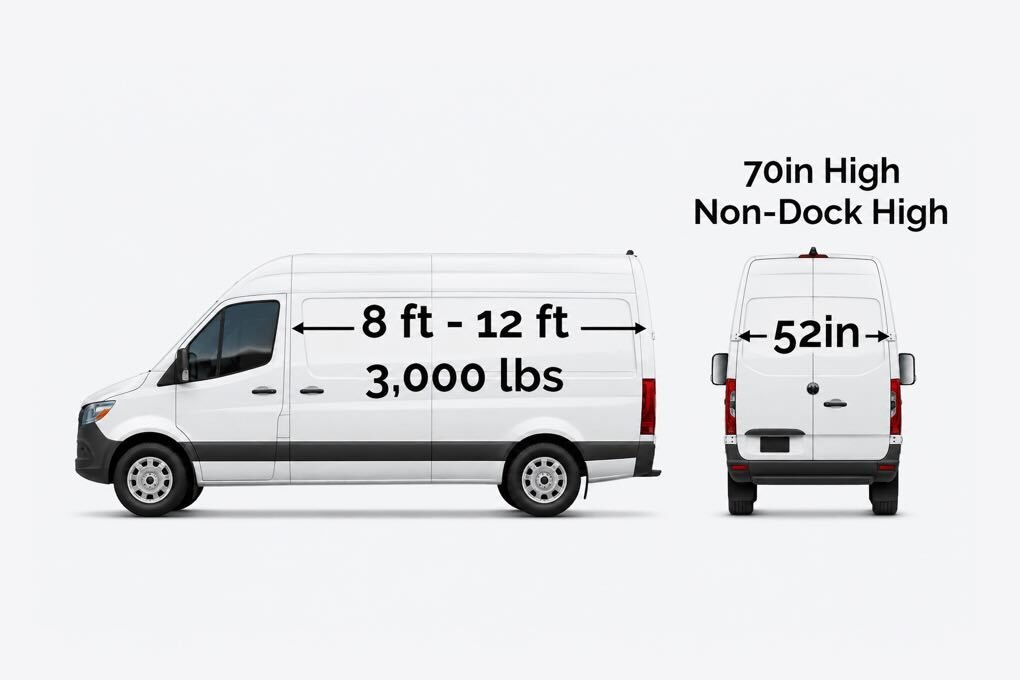
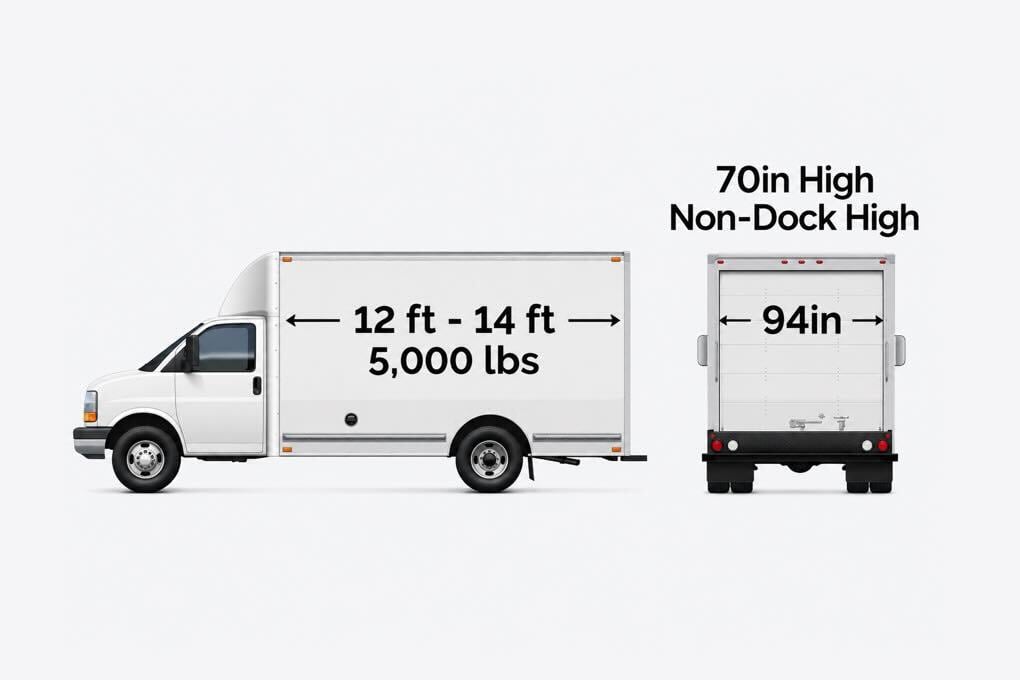
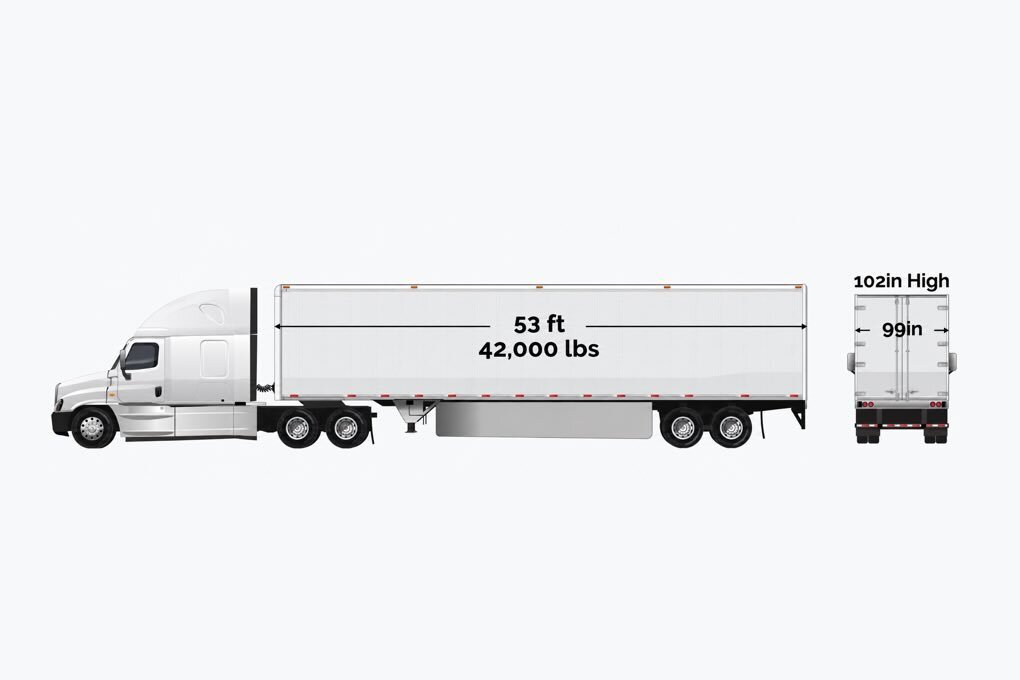
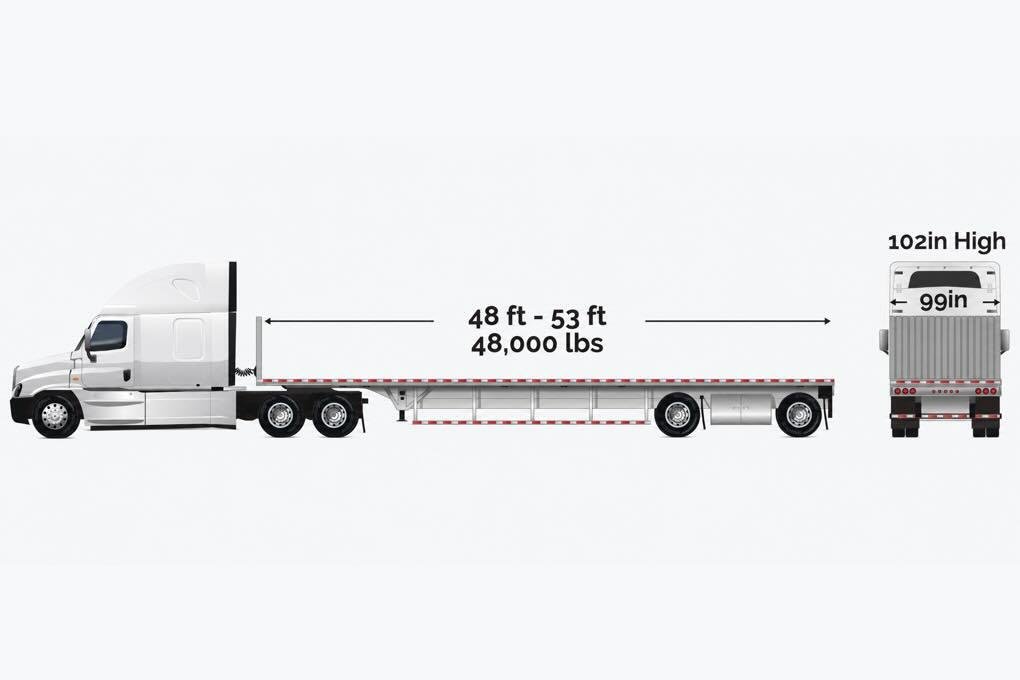
Your urgent shipment will be the only freight in the Sprinter van, box truck, straight truck, 53’ dry van, or full flatbed to minimize damage and ensure the shipment goes direct from pickup to delivery.

Frequently Asked Questions About Large Straight Trucks

What is a large straight truck and how does it differ from a semi-trailer?

A straight truck is a commercial vehicle in which the cab and the cargo body are mounted on one continuous chassis. Because there is no coupling point, the cargo area cannot be detached and left behind the way a semi-trailer can. That single-unit construction is the defining characteristic of the category.

Straight trucks range from compact units with roughly 12 feet of cargo space up to large models with bodies around 26 feet, and they can be built with enclosed boxes, flatbeds, refrigerated units, or specialty bodies. Their appeal in freight service comes from the balance they strike: substantially more capacity than a van, with far more maneuverability and site access than a tractor-trailer.

How much weight can a large straight truck carry?

The weight capacity of a large straight truck depends on whether the vehicle is operated under a CDL or non-CDL configuration. Non-CDL straight trucks are capped at a 26,000-pound Gross Vehicle Weight Rating, while CDL-operated vehicles can handle up to 54,000 pounds. Payload capacity will vary based on the truck's axle configuration and the weight of the vehicle itself, so confirming exact payload requirements with your logistics coordinator is always recommended before booking.

Can large straight trucks handle long-distance or interstate freight?

Yes. While large straight trucks are frequently associated with last-mile and urban delivery, they are fully capable of coast-to-coast and interstate runs. With diesel tanks holding up to 150 gallons, these vehicles can travel up to 1,200 miles between refueling stops. When equipped with a sleeper cab and operated by a driver team, large straight trucks can cross the country efficiently, making them a practical choice for time-sensitive, long-distance expedited freight shipments.

What types of freight are best suited for large straight trucks?

Large straight trucks are well suited for palletized goods, boxed merchandise, industrial components, medical equipment, and other medium-to-large shipments that require secure, enclosed transport. Their solid-sided cargo area, rear roller doors, and tie-down points make them versatile enough to handle both standard pallets and irregularly shaped cargo. Industries such as manufacturing, retail distribution, healthcare, and automotive parts supply commonly rely on large straight trucks for expedited freight needs.

Do large straight trucks have access advantages over full semi-trailers?

Yes. Because large straight trucks have a lower overall height and can be configured with a lower Gross Vehicle Weight Rating than a full semi-trailer, they can navigate weight-restricted bridges, low overpasses, and tighter urban streets that would be inaccessible to larger rigs. This routing flexibility often allows for more direct point-to-point delivery paths, reducing transit time and minimizing the handling risk associated with freight transfers at intermediate distribution points.

How does FullTruckload.com manage expedited shipments around the clock?

FullTruckload.com operates 24/7 dispatch, meaning a qualified logistics coordinator is available at any hour to accept, plan, and execute urgent freight moves. From the moment a shipment is tendered, the team handles vehicle selection, routing, driver assignment, and real-time tracking updates. Shippers receive a single point of contact throughout the move, eliminating the confusion of dealing with multiple parties during time-critical freight situations.

What tracking capabilities does FullTruckload.com provide?

FullTruckload.com uses advanced tracking technology to provide shippers with real-time visibility into the location and status of their freight from pickup through delivery. Updates are accessible without requiring shippers to chase down information manually. This level of transparency is especially important for expedited and critical shipments where delivery timing directly affects production schedules, customer commitments, or downstream logistics operations.

What is the difference between straight trucks and semi-trucks for freight shipping?

Straight trucks mount the cargo body directly onto the same frame as the cab, creating a single rigid unit. Semi-trucks use a separate tractor that pulls a detachable trailer, offering greater capacity but reduced maneuverability. For medium-volume shipments that require access to urban delivery points, weight-restricted roads, or low-clearance routes, straight trucks are often the more practical and cost-efficient choice.

How do I know if straight trucks are the right vehicle for my shipment?

Straight trucks are well matched to shipments occupying roughly 10 to 12 pallet positions and weighing up to 54,000 pounds gross with a CDL operator. If your freight is too large for a cargo van or box truck but does not fill a full semi-trailer, a large straight truck is likely the right fit. FullTruckload.com can assess your dimensions, weight, and delivery requirements to recommend the best configuration.

Can straight trucks be used for dedicated, exclusive-use freight shipping?

Yes. FullTruckload.com operates straight trucks on a dedicated, exclusive-use basis, meaning no freight other than yours rides in the vehicle. This eliminates the handling touches and delay risks common in shared freight models, and it is especially important for high-value, fragile, or time-sensitive cargo that cannot tolerate intermediate stops or consolidation terminals.

Are straight trucks available for same-day or overnight shipments nationwide?

Straight trucks are available 24 hours a day, seven days a week through FullTruckload.com. Same-day dispatch is standard for urgent freight, and driver teams utilizing sleeper-cab configurations can execute overnight or cross-country runs without mandatory rest delays. Coverage extends nationwide, allowing straight truck shipments to originate from or deliver to virtually any US location.

What industries commonly rely on straight trucks for their freight needs?

Industries that frequently use straight trucks include manufacturing, retail distribution, healthcare, automotive parts, and construction supply. Their enclosed, solid-sided cargo bodies protect goods from weather and theft, making them suitable for high-value or sensitive materials. The ability to navigate urban cores and restricted-access sites also makes straight trucks a common choice for last-mile delivery operations within dense metropolitan areas.

What is a 26-foot straight truck?

A 26-foot straight truck is the largest common configuration in the category — an enclosed body of roughly 26 feet mounted on a heavy-duty single-frame chassis. It represents the most capacity available before stepping up to a tractor-trailer, and it is a familiar sight in regional distribution, moving services, and expedited freight.

Vehicles at this size are frequently specified with a gross vehicle weight rating just below the threshold that triggers commercial driver's license requirements, which broadens the pool of available drivers. Many are built to dock height and can be equipped with liftgates, e-track, and air-ride suspension. Actual interior dimensions and payload differ between builds, so the specifications of the assigned truck should be confirmed for load planning.

When should I use a straight truck instead of a 53-foot dry van?

Choose a straight truck when the freight does not require a full trailer's space or the delivery site cannot accommodate one. Loads in the range of roughly six to a dozen pallets, deliveries into urban areas, retail and commercial addresses, campuses, and job sites, and any location with tight turning radii or low clearances all favor the smaller vehicle.

A 53-foot dry van becomes the better choice as volume approaches full truckload, when heavy palletized freight would exceed a straight truck's weight rating, or on long lanes where cost per pound matters more than maneuverability. The common mistake is defaulting to a trailer for a load that would ship more cleanly and less expensively in a right-sized straight truck.

What is expedited trucking?

Expedited trucking is freight service organized around meeting a specific deadline rather than around network efficiency. Equipment is sourced and dispatched as quickly as capacity allows, the shipment travels directly to its destination, and terminal handling is eliminated because the vehicle carries nothing else.

The service spans every equipment size, from cargo vans through straight trucks to full tractor-trailers, and the appropriate vehicle is chosen based on the freight rather than the urgency alone. Transit time is governed primarily by driving distance and federal hours-of-service limits; team drivers are used where a single driver's rest requirements would push delivery past the deadline. Because outcomes depend on lane, equipment availability, and conditions, realistic timing is established for each shipment individually.

CTA Hero Star Background
TOP