

Hot Shot Trucking Industry
The hot shot trucking industry exists to move time-critical loads directly from pickup location to final destination without the delays built into standard freight networks. FullTruckload.com connects shippers with the dedicated carriers and equipment needed to keep operations moving.
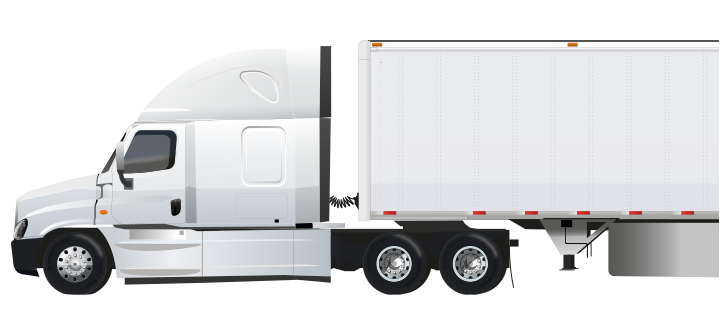





Hot Shot Trucking Services and Equipment
Hot Shot Trucking Industry: How Expedited Freight Moves
The hot shot trucking industry fills the operational gap between full truckload and less than truckload freight. When a shipment is too urgent for standard LTL consolidation but does not fill a 53-foot trailer, a hot shot trucking company steps in with smaller trucks, dedicated capacity, and direct routing to a single destination.
The model is built around speed and exclusivity. Your freight does not share space with other shippers' cargo, does not pass through sorting hubs, and does not wait for a full load to accumulate. Hotshot freight moves when it is ready, on specialized equipment matched to its size and weight. Loads that are typically smaller than a full truckload are ideal candidates, including small parcels, single pallets, and multi-piece equipment sets that need to be delivered immediately.
Across many industries, from construction and oil and gas to manufacturing and agriculture, the hot shot trucking industry handles time-sensitive loads that cannot wait. Understanding how it works helps shippers make faster, better-informed decisions when tight deadlines leave no room for error.
The hot shot trucking industry continues to expand as shippers across construction, manufacturing, oil and gas, and retail demand faster alternatives to conventional freight networks. FullTruckload.com connects shipping buyers with dedicated carriers equipped to handle urgent, non-standard loads that fall outside the constraints of traditional LTL or full truckload lanes, delivering freight directly and without delay anywhere across the continental United States.

Hot Shot Delivery
Hotshot delivery services use cargo vans, medium duty trucks, straight trucks, and purpose-matched hot shot trailers to move urgent loads on tight schedules. Whether the freight is a small parcel or a multi-piece equipment set, a dedicated vehicle moves it directly from pickup location to drop off locations with no stops in between. This flexible freight solution is designed for shippers who need reliable transportation without the overhead of a full tractor trailer.

Flatbed Trucking
Flatbed trucks and flatbed trailers are the workhorses of hotshot freight, handling oversized materials, steel, lumber, machinery, and building materials that cannot be enclosed. Open-deck capacity is matched to load dimensions, keeping your cargo moving on efficient routes without unnecessary handling. For loads that exceed what a heavy duty pickup truck and bumper pull trailer can carry, larger flatbed equipment steps in to cover the weight and dimensional requirements.

Expedited Freight Shipping
Expedited freight shipping prioritizes your cargo above standard network freight, using direct routing and rapid dispatch to compress transit time. For shippers facing line-down events, jobsite shutdowns, or supply chain disruptions, expedited service provides a reliable path to recovery. The hot shot trucking industry plays a critical role here, offering customized solutions that match the right truck to the specific needs of each urgent delivery.

On-Demand Hot Shot Freight Coverage
When production lines stall, job sites run dry, or critical equipment breaks down, waiting for a scheduled freight run is not an option. FullTruckload.com matches urgent shipments with immediately available dedicated vehicles, ensuring cargo moves the moment it is ready. The hot shot trucking industry exists precisely for these moments, and our dispatch team operates around the clock to place the right carrier on your load without delay or compromise to equipment fit.
WHAT WE DO
See Hotshot Delivery Services in Action
The hot shot trucking industry handles freight that standard networks are not built for, moving urgent loads directly from origin to destination on specialized equipment. From heavy duty pickup trucks pulling bumper pull trailers to box trucks and straight trucks, the right equipment makes the difference on every load.
How the Hot Shot Trucking Industry Moves Freight from Pickup to Final Destination Through FullTruckload.com
KEY BENEFITS
A nationwide carrier network built for the speed and flexibility the hot shot trucking industry demands.
FullTruckload.com operates across a nationwide network of vetted carriers ready to move freight on short notice. When a hotshot load is placed, dispatch immediately identifies the closest available carrier with the right equipment configuration. That carrier moves directly from the pickup location to the drop-off point, bypassing hub-and-spoke delays that slow conventional freight. Shippers benefit from dedicated capacity, time-sensitive execution, and a logistics partner that coordinates every step without requiring direct carrier management. Whether freight crosses multiple state lines or moves regionally, the response is fast and the route is direct.
EXPLORE OUR SERVICES


Hot Shot Trucking Across Many Industries
- Construction Job Sites
- Oil and Gas Urgent
- Manufacturing Parts Freight
- Agricultural Equipment Loads
- Automotive Hot Shot Loads
- Retail and Industrial Critical
- Owner-Operator Hot Shot Jobs
- Government and Defense Freight
- Healthcare and Medical Supplies
- Trade Show and Event Freight

Construction Job Sites
Construction projects run on tight schedules where a missing component can idle an entire crew. Time-sensitive construction freight, from structural steel and rebar to heavy equipment attachments and building materials, moves on flatbed trucks and gooseneck trailers sized to the load. Hot shot services keep job sites supplied without waiting for a full truckload to accumulate, reducing costly downtime and keeping project timelines intact. Dedicated freight shipping means your materials arrive at the job site, not at a terminal. The hot shot trucking industry plays a critical role in keeping construction operations on schedule when standard freight networks fall short.

Oil and Gas Urgent Loads
Wellsite operations cannot afford unplanned downtime. When a pump fails or a critical component needs replacement, urgent transport to a remote location is the only option. Hotshot trucking companies with the right specialized equipment and operating authority carry loads directly to the field, bypassing the delays of standard freight networks. The transportation industry recognizes that remote locations present unique access challenges, and experienced hot shot carriers understand the scheduling pressures that come with energy sector deliveries. Cost savings from avoiding extended downtime far outweigh the investment in expedited service.

Manufacturing Parts Freight
A line-down event in a manufacturing facility can cost significant money per hour. Specialized shipments of replacement parts, tooling, or production components need to move fast and arrive intact. The hot shot trucking industry handles these scenarios with dedicated vehicles, efficient routes, and no intermediate handling. For manufacturers running just-in-time production, expedited delivery services provide a reliable recovery path when standard supply chains fall short and the production clock is running. Flexible freight solutions mean the right truck is matched to the specific needs of each shipment.

Agricultural Equipment Loads
Harvest windows are narrow, and equipment failures during peak season have outsized consequences. Bulky items like tractor components, irrigation equipment, solar panels, and large attachments require open-deck capacity and careful load planning. Tilt deck trailers and flatbed trucks are commonly used for agricultural freight, accommodating the dimensions and weights that enclosed trucks cannot handle. Hotshot delivery services get replacement equipment to the field quickly, minimizing the time between breakdown and resumption of operations. The hot shot trucking industry is well-suited to carry loads of this type across state lines and to remote locations.

Automotive Hot Shot Loads
Hauling automotive components on a hot shot basis requires carriers with specialized equipment and experience handling high-value freight. Assembly plants and distribution centers both rely on hot shot services when parts shipments fall behind or a vehicle needs to move on short notice. Loads that are typically smaller than what semi trucks and tractor trailers are dispatched for can move efficiently on dedicated hotshot equipment, maintaining the urgent deliveries that automotive supply chains depend on to avoid production gaps. The trade off between cost savings and speed is straightforward when a line stoppage is on the line.

Retail and Industrial Critical Items
Retail distribution centers and industrial facilities face situations where critical items need to reach a specific location before a deadline. Whether it is replacement parts for a broken conveyor, display fixtures for a store opening, or industrial components for a facility repair, the hot shot trucking industry provides a direct path from pickup to delivery. Expedited freight transport bypasses the consolidation and sorting delays of standard freight, ensuring critical items arrive in a timely manner. Cargo vans and box trucks handle smaller loads, while flatbed trucks and straight trucks cover heavier or bulkier freight requiring open-deck capacity.

Owner-Operator Hot Shot Jobs
For owner-operators looking to find hot shot jobs, working with an established logistics company provides access to consistent hotshot loads without relying solely on load boards. Hot shot trucking jobs through freight brokers connect drivers with shippers who need dedicated capacity on short notice. Company drivers and independent operators alike benefit from steady income potential, clear load details, and support from a dispatch team that handles the coordination. Lower startup costs make entering the hot shot trucking industry accessible for drivers with a heavy duty pickup truck and the right hot shot trailers. Long hours are part of the business, but finding hotshot loads through a trusted partner reduces time spent searching and increases time spent hauling. A valid commercial driver license and proper insurance premiums are baseline requirements for any driver looking to find loads in this segment.

Hot Shot Delivery for Government and Defense Supply Chains
Federal, state, and municipal agencies frequently require urgent delivery of equipment, supplies, and components that cannot wait for consolidated freight schedules. FullTruckload.com provides dedicated hot shot capacity for government contractors and public sector organizations that need direct, time-definite transportation with full chain-of-custody visibility. Dedicated vehicles, single-driver accountability, and real-time tracking support the documentation and delivery precision that government and defense procurement teams require, making hot shot trucking a dependable solution when standard government freight channels cannot meet the timeline.

Urgent Medical and Healthcare Freight Moved Without Delay
Hospitals, medical device manufacturers, and healthcare distributors face freight emergencies that carry real consequences for patient care and facility operations. When critical equipment, replacement parts, or time-sensitive medical supplies need to move immediately, hot shot trucking provides a dedicated vehicle dispatched without waiting for load consolidation. FullTruckload.com coordinates pickup and delivery around the clock, with a single point of contact monitoring every leg of transit. Healthcare shippers gain the speed and reliability needed to keep facilities operational when standard freight networks cannot meet the urgency of the situation.

Hot Shot Solutions for Trade Shows and Time-Critical Event Logistics
Trade show exhibits, promotional displays, and event equipment operate on immovable deadlines. A missed delivery means an empty booth or a cancelled installation, with no opportunity to recover. FullTruckload.com dispatches dedicated hot shot carriers that move event freight directly from origin to venue without intermediate handling or shared space with other shippers. Setup crews, exhibit managers, and corporate event teams rely on this approach to guarantee materials arrive on schedule, undamaged, and ready for installation well before show floors open or event timelines begin.
INDUSTRY DEEP DIVE
Everything You Need to Know About Hot Shot Trucking

Finding and Securing Hot Shot Loads
The ability to find hot shot loads quickly is one of the most critical operational skills in the hot shot trucking industry. Load boards are the primary tool most hotshot drivers rely on to locate available freight between dedicated contracts. These digital marketplaces connect shippers with hot shot carriers in real time, allowing drivers to filter by weight, distance, and equipment type.
How Hot Shot Truckers Use Load Boards
Load boards give hot shot truckers visibility into thousands of available shipments at any given time. Many drivers cross-reference multiple platforms to maximize their options and avoid deadhead miles between loads. Experienced operators treat load boards as a supplement to direct shipper relationships, not a replacement.
Specialized Shipments and Smaller Loads
Hot shot loads are typically smaller than what semi trucks or tractor trailers haul, making them well suited for urgent delivery situations where a full truckload is not required. Specialized shipments such as oilfield components, construction materials, and critical items for the gas industry are common freight types. These loads often involve tight schedules and a single destination, which is where hotshot trucking companies have a clear operational advantage.
Hot shot carriers that build direct relationships with shippers in many industries reduce their dependence on load boards and gain access to more consistent freight. Dedicated freight shipping arrangements provide steady income and allow drivers to plan routes more efficiently. This trade off between spot market flexibility and contract stability is a defining consideration for anyone building a trucking business in this space.
Time sensitive freight is the core value proposition of hot shot transportation. Shippers choose hot shot trucking specifically because traditional trucking timelines do not meet their operational requirements. Understanding how to position your capacity for urgent transport requests is what separates high-earning operators from those who struggle to fill their schedules.

Vehicles and Trailers in Hot Shot Trucking
Equipment selection is one of the most consequential decisions in the hot shot trucking industry. Unlike semi trucks or tractor trailers, hotshot trucking relies on smaller trucks paired with purpose-built trailers, giving operators lower startup costs and greater flexibility across freight types. The right combination of vehicle and trailer determines which loads you can accept and how competitive your rates will be.
Flatbed Trailer and Gooseneck Trailer Options
The flatbed trailer is the most common trailer type in hotshot trucking, offering open deck access for loading bulky items, construction materials, and oilfield equipment. Gooseneck trailers attach via a special hitching system that connects to the bed of a pickup truck, allowing for heavier loads than a standard ball hitch setup. Tilt deck trailers are another option, particularly useful for hauling cars or equipment that cannot be easily loaded by forklift.
Cargo Vans and Smaller Trucks for Expedited Shipments
Cargo vans are a practical entry point into hotshot deliveries for operators focused on small parcels and time sensitive freight in urban or regional markets. These flexible vehicles have lower maintenance costs and fuel expenses compared to larger rigs, making them attractive for expedited shipments that do not require flatbed capacity. Many drivers start with a cargo van and scale into larger equipment as their freight volume grows.
Equipment needed for hot shot jobs extends beyond the vehicle itself. GPS tracking systems, load securement gear, and proper lighting are all operational necessities that affect both safety and compliance. Operators must also account for the weight ratings of their tow vehicle to ensure they can legally and safely handle the loads they accept.
Maintenance costs are an ongoing reality in this business, and equipment downtime directly translates to lost revenue. Building a maintenance schedule and keeping spare parts on hand for common failure points helps hotshot drivers stay on the road and meet tight deadlines reliably.

Careers and Opportunities for Hot Shot Drivers
Hot shot trucking jobs attract many drivers who want more autonomy than traditional company driver roles provide. The owner operator hot shot model allows individuals to control their own schedules, choose their freight, and build direct relationships with shippers. This independence comes with real responsibilities, including managing operating authority, commercial insurance, and business expenses that company drivers do not face.
Owner Operator Hot Shot and Operating Authority
Securing operating authority from the FMCSA is a foundational step for anyone entering the hot shot trucking industry as an independent operator. This process involves registering your business, obtaining a USDOT number, and securing the appropriate commercial insurance coverage. Insurance premiums for hotshot trucking can vary significantly based on equipment type, freight category, and the driver's safety record.
Find Hot Shot Jobs Through Multiple Channels
Hot shot drivers who want to find hot shot jobs consistently should develop a multi-channel approach that combines load boards, direct shipper outreach, and logistics company partnerships. Many industries including construction, oil and gas, and manufacturing rely on expedited freight transport and actively seek reliable hot shot truck drivers. Building a reputation for on-time performance and professional communication is the most effective long-term strategy for securing repeat business.
Long hours are a reality of hot shot trucking work, particularly for drivers serving time sensitive freight customers who need rapid deliveries on short notice. Operators must balance the appeal of steady income against the physical demands of the job and the importance of hours-of-service compliance. Experienced hotshot truckers learn to manage their schedules proactively rather than reactively.
The path from new driver to established operator in the hot shot trucking industry typically involves years of building shipper relationships and refining operational efficiency. A skilled team of support contacts including a dispatcher, accountant, and mechanic can make a significant difference in how smoothly a solo operation runs. Treating this as a business from day one, rather than just a driving job, is what separates sustainable operators from those who exit the industry within their first year.

Expedited Transport for Time-Critical Freight
The hot shot trucking industry was built around a single premise: some freight cannot wait. Hot shot delivery services exist to move critical items from pickup location to final destination faster than any less than truckload or standard carrier option can achieve. This speed advantage is what drives shippers across many industries to choose hot shot trucking over conventional freight services.
Same Day Freight and Tight Deadlines
Same day freight requests are among the most demanding scenarios in hotshot trucking, requiring drivers to be available on short notice and willing to cover significant distances in a single shift. Expedited delivery services built around same day commitments command premium rates precisely because the logistics company absorbs the cost of keeping capacity available at all times. Shippers in manufacturing, energy, and construction sectors depend on this capability to avoid costly production shutdowns.
Urgent Transport Versus Traditional Trucking
Traditional trucking operates on scheduled lanes and consolidated freight models that prioritize cost efficiency over speed. Urgent transport through hotshot trucking companies operates on the opposite logic: the shipment moves immediately, directly, and without stops. This dedicated approach eliminates the transit variability that comes with shared freight networks and gives shippers confidence in delivery timing.
Expedited freight transport also serves as a practical alternative to air freight for shipments that are too large or heavy for cargo aircraft but still require faster transit than ground freight networks provide. Hot shot carriers can often cover regional distances of 300 to 800 miles within a single business day, bridging the gap between air freight speed and standard trucking economics. This positioning makes hotshot services a cost savings tool when air freight rates are prohibitive.
Logistics services built around urgent delivery require more than just fast trucks. Effective communication, GPS tracking, and proactive updates to the shipper are all part of what makes a trusted partner in expedited logistics. Hot shot carriers that invest in these operational details build the kind of reputation that generates repeat business and referrals from demanding freight customers.

Industries and Applications for Hot Shot Services
Hot shot trucking services support a wide range of industries that share one common requirement: freight that must move on a precise timeline. The gas industry is historically one of the largest users of hotshot trucking, relying on rapid deliveries of drilling components, pipe, and equipment to remote well sites where delays translate directly into lost production revenue. Understanding the specific freight needs of each sector is what allows hotshot trucking companies to deliver genuinely customized solutions.
Hot Shot Shipment in Oil, Gas, and Energy Sectors
A hot shot shipment in the energy sector often involves oversized or irregularly shaped components that require specialized loading and securement. Solar panels, valve assemblies, and pump components are examples of critical items that move through hotshot deliveries on tight schedules. Operators serving these markets need to understand load securement regulations and have the right equipment to handle these freight types safely.
Construction and Manufacturing Freight Needs
Construction sites and manufacturing facilities are frequent users of expedited service because their supply chains are highly sequential. A missing component can halt an entire project, making the cost savings from avoiding downtime far greater than the premium paid for hot shot transportation. Hot shot truckers who develop expertise in these verticals become indispensable logistics partners rather than commodity carriers.
Heavy haul requirements occasionally arise within the hot shot trucking industry when loads approach or exceed standard weight limits for smaller trucks. While hot shot carriers typically handle loads lighter than what semi trucks transport, there is meaningful overlap in the middle weight range where hotshot trucking can compete on both speed and price. Knowing the limits of your equipment and operating authority is essential before accepting these loads.
A reliable logistics company offering hot shot trucking services must go the extra mile to understand each client's operational context, not just their freight dimensions. Dedicated freight shipping relationships in industries like construction and energy are built on consistent performance, clear communication, and the ability to scale capacity when demand spikes. Shippers who find a hot shot trucking company they can trust rarely look elsewhere.
What Drives Pricing in the Hot Shot Trucking Industry
Hot shot trucking rates are influenced by several interconnected variables rather than a single fixed schedule. Distance, urgency, equipment type, freight dimensions and weight, fuel costs, and current carrier availability all contribute to what a shipper will pay for a dedicated hotshot move. Loads requiring specialized equipment such as flatbeds, gooseneck trailers, or enclosed vehicles typically carry different rate structures than standard sprinter van or straight truck moves. Shippers requesting same-day or next-hour pickup will generally see pricing that reflects the premium placed on immediate carrier availability.
FullTruckload.com provides transparent quotes that account for these factors upfront, giving shipping buyers a clear cost picture before committing to a move. Because the hot shot trucking industry operates on dedicated capacity rather than consolidated loads, the rate reflects the exclusive use of that vehicle and driver for your freight alone. For many shippers, the cost of downtime avoided more than offsets the difference in price compared to standard freight options.

How Hot Shot Trucking Differs from Expedited LTL Service
Expedited LTL and hot shot trucking both address urgent freight needs, but they operate on fundamentally different models. Expedited LTL moves freight faster than standard consolidation schedules but still combines multiple shippers' cargo on shared equipment and routes loads through terminal networks. This introduces handling touchpoints and transfer delays that can add hours or days to a delivery window, even when freight is flagged as priority. For loads with true time-critical requirements, shared infrastructure creates risk that dedicated hot shot capacity eliminates entirely.
The hot shot trucking industry solves this by assigning a single vehicle exclusively to one shipper's freight, routing directly from origin to destination with no intermediate stops or terminal handling. FullTruckload.com matches shipments to appropriately sized dedicated vehicles, so shippers are not paying for unused trailer space while still receiving the direct routing and speed that urgent freight demands. When delivery windows are measured in hours rather than days, hot shot trucking is the structurally superior choice.
Expedited Trucking Excellence: Explore Our Resource and Blog Section
FullTruckload.com is a leader in the trucking industry. Our blog and resource section offers information and resources to improve your logistics strategy.



From critical shipments to ongoing support, see why businesses continue to choose FullTruckload.com