
Skip to content

Box Trucks

When your urgent freight needs more room than a cargo van, box trucks deliver the capacity, flexibility, and speed to keep it on schedule.
Box Trucks

EXPEDITED DELIVERY SOLUTIONS

What Are Box Trucks?

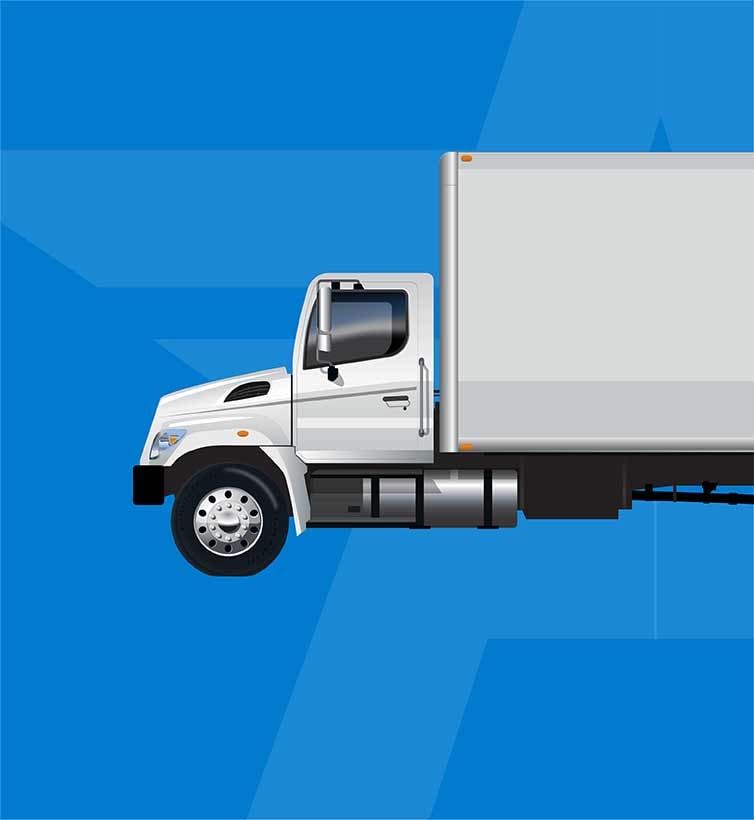
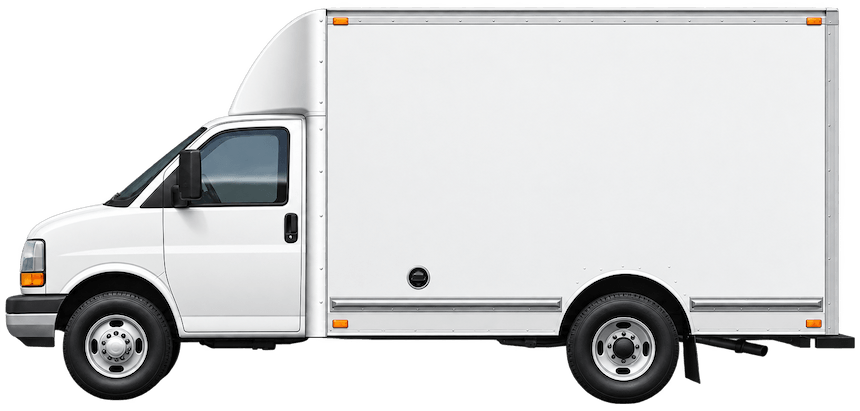
A box truck is a commercial vehicle built with an enclosed, rectangular cargo body mounted on the same chassis as the cab. Because the body and cab share one frame, the vehicle cannot drop its trailer the way a tractor-trailer can — the cargo area travels with the truck at all times. Shippers and carriers also refer to these vehicles as cube trucks, cube vans, or straight trucks, and the terms are largely interchangeable in day-to-day freight conversation.

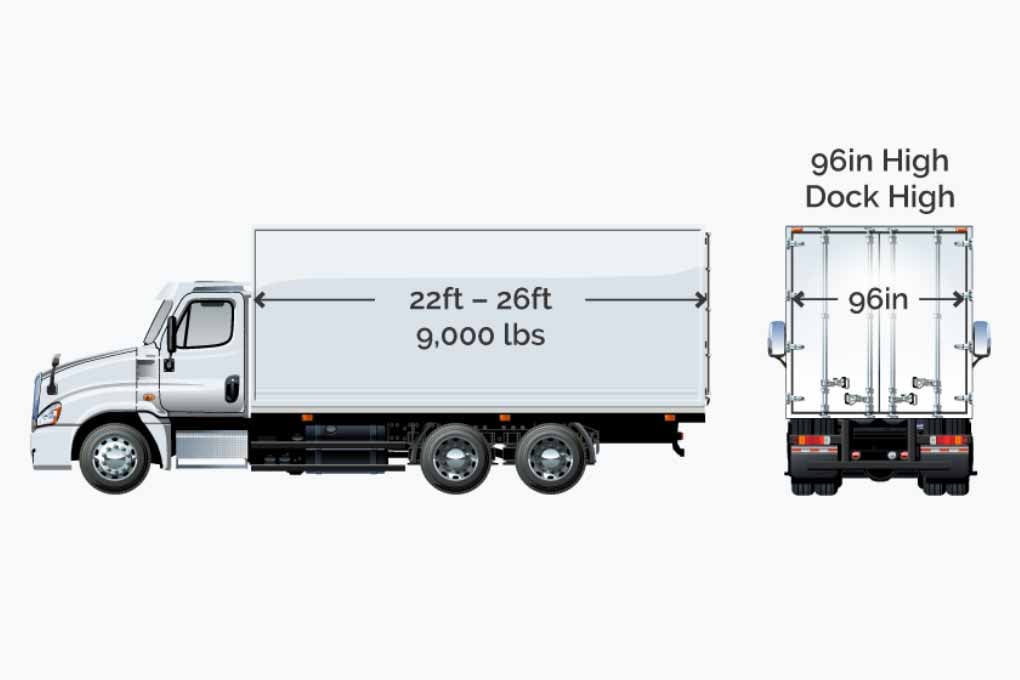
Cargo bodies are commonly offered in lengths that run from roughly 10 feet up to about 26 feet, with interior widths near eight feet in most standard configurations. Payload and interior height vary considerably by chassis class, body build, and how the truck is registered, so capacity should always be confirmed against the specific vehicle assigned to a load. As a general guide, smaller bodies suit a handful of standard pallets, while the largest bodies may accommodate roughly a dozen pallet positions if weight allows.

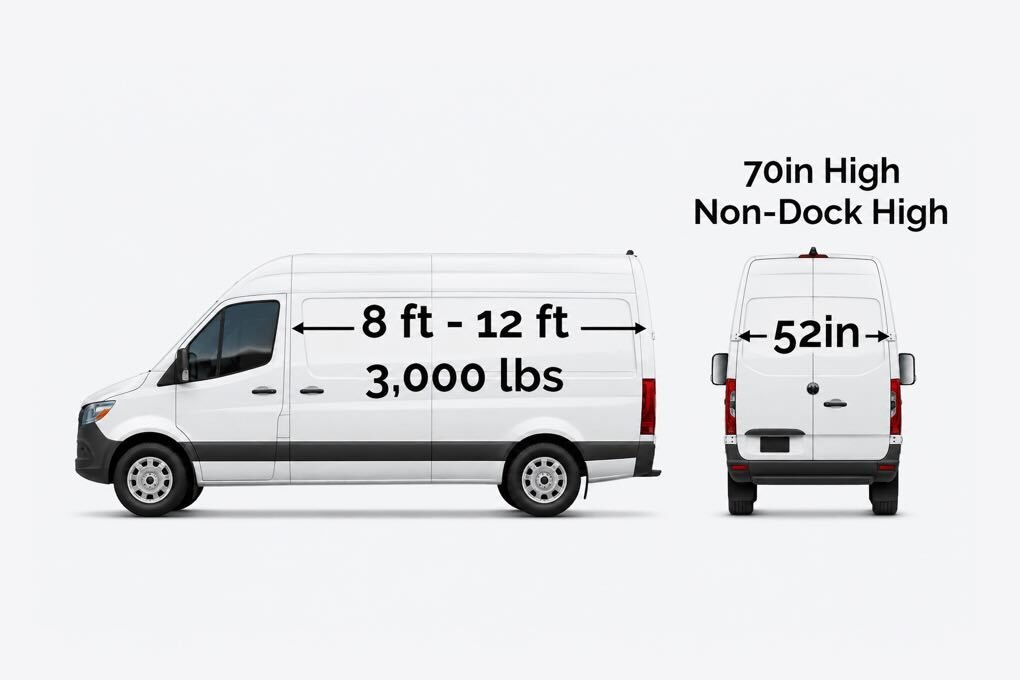
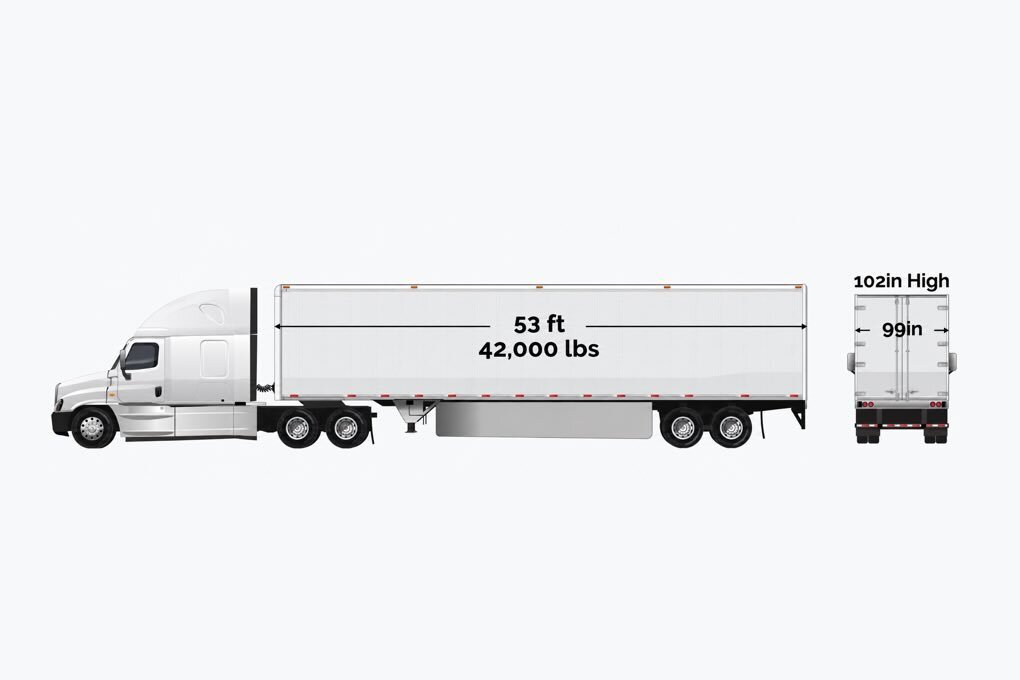
The category sits between two familiar reference points. A Sprinter or cargo van handles small, light shipments; a 53-foot dry van handles full truckload volume. Box trucks cover everything in between — mid-sized freight that fills more than a van but leaves a semi-trailer half empty. FullTruckload.com works with available box truck capacity across the country, matching load size, weight, and delivery geography to a vehicle that fits rather than defaulting to whatever equipment happens to be nearby.

Those characteristics make box truck delivery well suited to expedited freight. The load is dedicated to one customer, the driver runs point to point, and the shipment is not rehandled at a terminal — three factors that remove most of the delay built into shared-network transportation. Box trucks are most often used for local and regional freight, though a dedicated truck can also run multi-state and long-distance moves when the shipment warrants it.

Request a Quote Now

Add your shipment details below, and one of our professional expeditors will contact you within minutes. For immediate assistance on an urgent quote, call (800) 373-2480 with these details handy.

icon-box-truck

Box trucks fill the gap between compact cargo vehicles and larger freight options.

icon-package-box

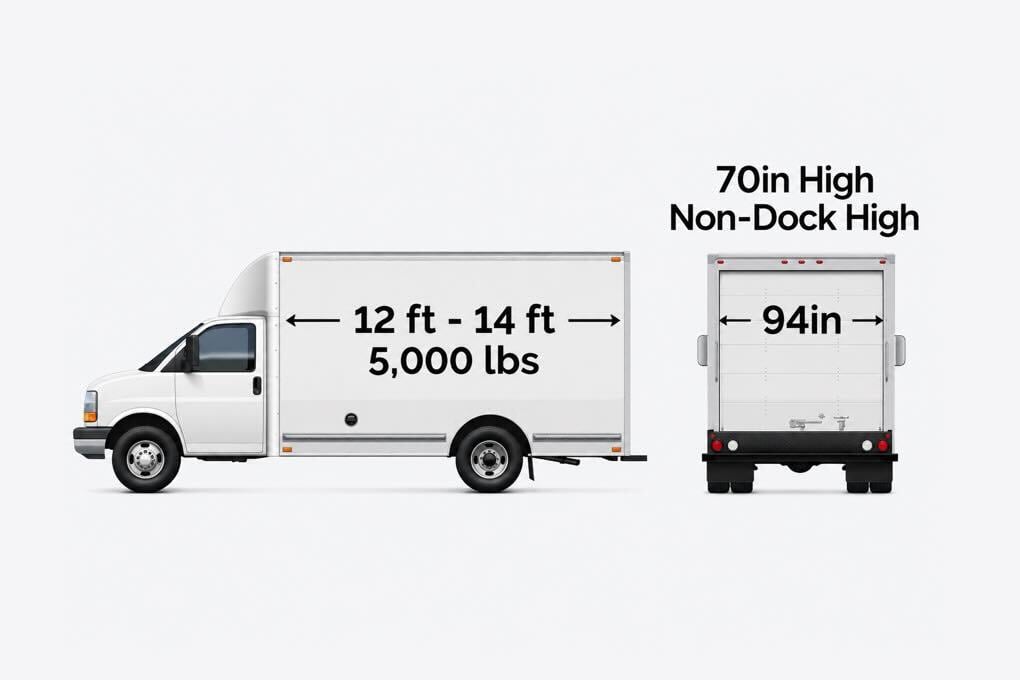
Cargo capacity up to 4 pallets, maximum payload 5,000 lbs.

gear

Suitable for urban driving as well as carrying big loads.

icon-documents

Cabover box trucks especially well-suited for urban and suburban environments.

Box Truck Cargo Capacity

There are some variations in size between box trucks, particularly in length, but when assessing if one will be right for your load, assume the following:

  • Width: 94”
  • Height: 70”
  • Length: At least 12’, some go up to 16’
  • Payload: 5,000lbs (some models will take more)

The internal dimensions, including height and width, also impact how efficiently goods can be loaded. Factors such as the Gross Vehicle Weight Rating (GVWR), axle strength, and load distribution further influence a box truck’s maximum carrying capacity.

TYPES OF CARGO

These vehicles are so versatile it might be easier to list what they can’t carry. If it fits, with the exception of loose material that needs a hopper or tank, they’ll take it. Typical applications include:

Checkmark
Cartons, boxes, and other packages
Checkmark
Totes, drums and bins (covered or with lids to prevent spills)
Checkmark
Presentation stands and display materials
Checkmark
Industrial machinery (providing it doesn’t need to be moved with a fork lift)
Checkmark
Large or bulky spare parts
Checkmark
Engines, transmissions, anything similar that can be strapped to a pallet or cradle

FullTruckload.com: Box Truck Capacity Matched to the Load

KEY BENEFITS

NATIONWIDE NETWORK
SINGLE POINT OF CONTACT
DEDICATED EXPERTISE
REAL-TIME TRACKING

Access to box truck capacity in one metro area is useful; access across the country is what makes tight delivery windows achievable.

FullTruckload.com draws on a nationwide carrier network to locate suitable enclosed equipment near the pickup, shortening deadhead miles and getting freight loaded sooner. Because that network spans multiple truck sizes, a shipment that outgrows a cargo van need not jump to a full tractor-trailer — body length can be matched to the load.

EXPLORE OUR COVERAGE

ft-coverage

Range and Routes

Box trucks are at their best on short-to-medium range deliveries. Whether you need to get your freight or item across town or across state, a box truck is often the fastest and most cost-effective method. However, if you need a few cartons or pallets moving state-to-state or even into or out of Canada or Mexico, a box truck may still be your best option.

Two other factors to consider are reasonable fuel efficiency, and good for long highway hauls. Together, these can mean fewer stops and faster delivery.

The bottom line is, while box trucks are primarily intended for operations in built-up areas, where their agility and visibility translate to safe and quick journeys, longer trips are definitely not out of the question.


Licensing

Box trucks usually only require a standard driver’s license when GVWR is under 26,000 lbs. Some states or localities may have additional licensing, permitting, or operational requirements, particularly if the vehicle is being used for commercial purposes. Drivers should ensure compliance with all regulations.

KEY VEHICLE SPECIFICATIONS

Maximum payload

Around 5,000 lbs (some models will take more)

Maximum cargo dimensions

Width: 94”, height: 70”, length: 144 to 192”. (Models are available with additional cargo space over the cab.)

Loading

Floor is too low for a loading dock but a ramp simplifies manual loading. (Don’t try to drive a fork truck up the ramp and into a box truck though.)

Range

250 – 350 miles between refueling stops

Seats

Two seats, sometimes three

REQUEST A QUOTE

Reach out today and let's solve your urgent shipping needs.

CONTACT US

Customer Reviews

5.0 / 5

551 Reviews

Trusted by Businesses Nationwide

See customer feedback about our service, communication, and expedited shipping support.

Rated by customers on Google

Your Time-Sensitive Cargo Needs a Dedicated Freight Team

Expedited Ground

Box Truck Advantages

Delivery box trucks are highly advantageous for expedited freight due to their compact size, maneuverability, and versatility. Their enclosed cargo area provides secure and weatherproof transportation, ensuring that valuable goods remain protected during transit. With their smaller footprint compared to larger freight vehicles, delivery box trucks can navigate urban environments, tight streets, and loading docks more easily, enabling faster and more reliable deliveries.
Ground Transportation-1-1

Capabilities

Box trucks have a square body on a rigid frame. That results in good payload and lots of interior space, while keeping them small enough for city streets. Their capacious volume creates room for multiple pallets, drums, totes or wheeled carts and shelving. If additional capacity is needed, some have more space for cargo over the cab.

Hub to spoke

Design

An increasing number of box trucks adopt the “cabover” design, positioning the driver (and any passengers) directly above the engine. This setup shortens the vehicle’s overall length, enhances visibility, and sharpens its turning radius. As a result, cabover box trucks excel in urban and suburban settings, effortlessly tackling narrow streets and scarce parking spaces.

Cargo-1

Loading

The floor of most box trucks is below the level of the standard loading dock, (they won’t take the weight of a fork truck). A few box trucks are equipped with a powered lift platform, but these tend to be the exception. Most of these trucks have a rear roller door that doesn’t need extra space to swing open. Side doors are uncommon.

Versatility

Versatility

Whether cabover or the more standard design with the hood out in front, box trucks are nimble enough for urban streets and parking lots, yet large enough to carry a useful load. As stable and practical on the highway as at a sporting event or exhibition hall, they may be the ultimate in flexibility and versatility. Their adaptability makes box trucks a preferred choice for a wide range of industries, from delivery services to pop-up retail shops.

Regulations

Regulations

Like a Sprinter, box trucks don’t typically need a commercial driver’s license to operate. Box trucks usually only require a standard driver’s license when GVWR is under 26,000 lbs. They also get reasonably good gas mileage, (considering their boxy aerodynamics), which again serves to reduce operating costs. If you are seeking a balance between speed, cost, and reliability for loads smaller than a sprinter van could handle alone, Sprinter van service stands out as a superior option, ensuring that urgent shipments reach their destination swiftly and securely.

Efficiency

Efficiency

With a loading height compatible with most standard docks and roll-up rear doors for easy access, box trucks are designed for efficiency. They can navigate city streets with ease, park in tighter spaces than larger vehicles, and still handle substantial payloads. Whether you’re managing local deliveries or regional shipments, a box truck offers the flexibility and capacity to get the job done efficiently and cost-effectively.

same day delivery

Delivery Box Trucks for Last-Mile Freight

When a shipment needs to travel from a distribution hub directly to a business, job site, or event venue, delivery box trucks are the preferred solution. Their enclosed cargo area protects goods in transit while their compact footprint allows access to loading docks, side streets, and urban delivery points that larger freight vehicles simply cannot reach. FullTruckload.com dispatches dedicated delivery box trucks around the clock, keeping your last-mile freight on schedule with a single point of contact from pickup to drop-off.

Industries That Rely on Box Trucks

oil-gas-1

Oil & Gas

Field operations and refineries order in quantities that fall between courier freight and truckload. Box trucks move pallets of drill-site consumables, valve and fitting assortments, instrumentation, spooled cable, and crated pump components to yards and remote facilities, with enclosed bodies keeping control equipment out of the weather on unpaved approach roads.

LEARN MORE

data center

Technology

Data center build-outs and IT refresh projects generate steady mid-sized freight: racks, patch panels, UPS units, spare drives, and palletized workstation deployments. A dedicated box truck delivers the full staging quantity in one enclosed load, and liftgate service allows drop-off at office buildings and colocation facilities that have no dock at all.

LEARN MORE

manufacturing-1

Automotive

Tier-one suppliers, assembly plants, dealer groups, and body shops all ship freight too large for a van. Box truck delivery handles pallets of stampings, seat sets, wiring harnesses, glass, and painted panels between plants and regional parts operations, and enclosed transport protects finished surfaces that an open deck would expose.

Learn More

construction-1

Construction

Job sites need materials staged in usable batches rather than delivered by the trailer. Box trucks bring fixtures, fasteners, electrical rough-in materials, HVAC components, tile, and tooling directly to the site, and a liftgate lets the driver set freight on the ground where no forklift is available.

LEARN MORE

retail

Manufacturing

Plants running lean inventory reorder in small, frequent lots. Box truck freight supports that rhythm by moving pallets of components, subassemblies, fixtures, packaging materials, and raw stock between suppliers and production facilities on a dedicated basis, which keeps a replenishment order from sitting in a consolidation terminal waiting for a full trailer.

LEARN MORE

aerospace

Aerospace & Defense

Program work involves high-value hardware that is often bulky rather than heavy. Enclosed box trucks carry tooling, ground support equipment, test fixtures, crated avionics, and interior components between manufacturing sites, MRO facilities, and government installations, with exclusive use limiting the number of hands that touch a controlled shipment in transit.
LEARN MORE

Machinery

Machinery

Industrial equipment dealers and MRO operations regularly ship parts that are heavy for their size. Box trucks transport gearboxes, motors, hydraulic assemblies, pumps, bearings, and crated subassemblies to plants and repair shops, and the enclosed body shields precision surfaces and electronics from road spray during multi-state runs.
LEARN MORE

Mining

Mining

Mine sites sit far from supply centers, and a partial shipment usually means a second trip. Box truck freight service consolidates conveyor components, screen panels, electrical gear, lubricants, and replacement wear parts into one dedicated load bound for the site or processing plant.

LEARN MORE

Telecommunications

Telecommunications

Network construction and restoration crews draw on a mix of hardware and consumables. Box trucks move fiber reels, cabinets, batteries, radios, antenna hardware, and mounting steel to central offices, cell sites, and staging yards, where liftgate delivery matters because tower compounds rarely have lift equipment on hand.

LEARN MORE

Ground Transportation and Expedited Trucking Services

Our team of professionals works tirelessly behind the scenes to ensure every shipment arrives on time, and in optimal condition, at its final destination.
We offer the fastest ground and air transportation options for B2B customers across the United States, Mexico, and Canada.
We’re with you along every mile of your journey. Get peace of mind with a dedicated single point of contact.

The Right Capacity Is Key to Every Urgent Shipment

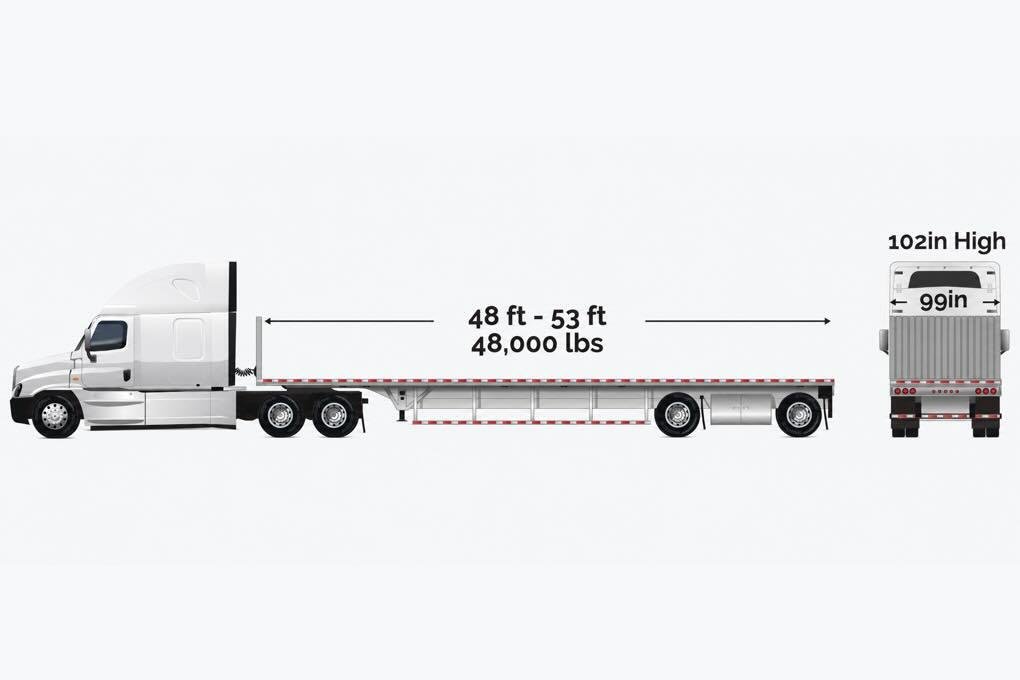
Your urgent shipment will be the only freight in the Sprinter van, box truck, straight truck, 53’ dry van, or full flatbed to minimize damage and ensure the shipment goes direct from pickup to delivery.

Frequently Asked Questions

What is a box truck?

A box truck is a commercial vehicle with an enclosed, box-shaped cargo compartment built onto the same chassis as the driver's cab. Unlike a tractor-trailer, the cargo body does not detach — the truck and its cargo area are a single unit. Freight is loaded through rear doors, which may be roll-up or swing-style, and many box trucks also have a side door for easier partial access.

The design gives shippers enclosed, secure capacity in a vehicle that remains practical to drive and park in developed areas. Box trucks are used across retail distribution, manufacturing replenishment, equipment delivery, and expedited freight, and they are among the most common vehicles in commercial trucking precisely because they cover the wide middle range of shipment sizes.

What is a cube van?

Cube van is another name for a box truck, most often applied to the smaller end of the category. The term comes from the shape of the cargo body, which is essentially a rectangular box with squared-off corners designed to maximize usable interior volume for its footprint.

In practice, "cube van," "cube truck," and "box truck" are used interchangeably by shippers and carriers, and the distinctions are regional rather than technical. When shipment planning depends on precise capacity, it is worth confirming the actual body length, interior height, door opening, and payload rating of the specific vehicle rather than relying on the label alone, since builds vary widely across chassis classes.

How much freight can a box truck carry?

Box truck payload varies significantly with chassis class, body construction, equipment such as liftgates, and how the vehicle is registered. Smaller box trucks are generally suited to lighter mid-sized loads, while larger units built on heavier chassis can carry substantially more. Published figures for a model line describe that configuration only and should not be treated as universal.

Two limits apply at once: the vehicle's legal weight rating and the cubic space inside the body. Dense freight such as steel parts or liquids hits the weight ceiling first, while bulky, lightweight goods run out of floor and stacking room. FullTruckload.com confirms weight, dimensions, and stackability before assigning equipment.

How many pallets fit in a box truck?

Pallet capacity depends on body length, pallet footprint, and whether freight can be stacked. A shorter body may hold a handful of standard 48-by-40-inch pallets on the floor, while the longest box truck bodies can accommodate roughly a dozen floor positions in typical configurations. Double-stacking can increase those counts considerably, but only when the freight, packaging, and weight rating allow it.

Loading pattern matters too. Pallets can be loaded straight, turned, or alternated depending on their dimensions, and the arrangement affects both how many fit and how weight distributes across the axles. Actual pallet dimensions and stack heights produce a far more accurate answer than a capacity chart.

What is the difference between a box truck and a straight truck?

There is no strict technical difference — a box truck is a type of straight truck. "Straight truck" describes the chassis architecture, meaning the cab and cargo body are mounted on one continuous frame with no detachable trailer. "Box truck" describes the body style on that frame: an enclosed rectangular cargo compartment.

The distinction in practice is size. Shippers tend to say "box truck" for smaller and mid-sized enclosed units and "straight truck" for the larger 24- to 26-foot vehicles that reach dock height. Both cover the same family, and a straight truck fitted with a flatbed body would not be called a box truck at all.

What is the difference between a box truck and a cargo van?

Size and access are the main differences. A cargo van such as a Sprinter, Transit, or ProMaster has a unified body with a lower roof and a load floor close to the ground, which makes it fast and easy to load by hand. A box truck has a separate, taller cargo body sitting higher off the ground and holds considerably more freight.

The choice comes down to volume and handling. A single pallet or a few oversized cartons moves most efficiently in a van. Several pallets, tall freight, or shipments requiring forklift loading call for a box truck, especially one with a liftgate. Weight ratings differ substantially too, so dense freight can require the larger vehicle even when it appears to fit in a van.

When should I use a box truck instead of a 53-foot dry van?

Use a box truck when the shipment does not need the space of a 53-foot trailer and the delivery location cannot easily accommodate one. Freight in the range of a few pallets to roughly a dozen, deliveries to urban addresses, retail storefronts, campuses, or sites without dock access, and moves where maneuverability is a concern all favor the smaller vehicle.

A 53-foot dry van makes more sense once the load approaches full truckload volume, and when both ends have proper docks and forklift support. Booking a full trailer for a partial load is not wrong — exclusive use has value at any size — but a right-sized box truck usually delivers the same direct service for less.

What is a dedicated box truck?

A dedicated box truck is a vehicle assigned exclusively to one customer's freight for the duration of a move or a contracted period. Nothing else is loaded alongside it, and the truck does not divert to pick up or drop off other shipments along the way.

Exclusivity produces two practical benefits. Transit is direct, since routing is built around one origin and one destination rather than a sequence of stops. Handling is minimized, because the freight is loaded once and unloaded once with no terminal transfers in between — a meaningful advantage for fragile, high-value, or precisely counted shipments. Some shippers arrange dedicated capacity on a recurring basis to support regular lanes, while others use it for individual time-sensitive moves.

What is expedited box truck delivery?

Expedited box truck delivery is time-critical freight service using an enclosed straight truck assigned to a single shipment. The truck is dispatched as capacity becomes available, drives directly to the destination, and skips the terminal network entirely.

Standard freight service is built for efficiency across many customers, which means consolidation, hub routing, and scheduled departures. Expedited service is built around a single customer's deadline instead. Because the vehicle carries only that load, transit time is governed largely by driving distance and hours-of-service rules rather than network schedules. Actual timing depends on distance, equipment availability, traffic, weather, and receiving hours, so realistic expectations are set once the specific lane and load are known.

Do box trucks have liftgates?

Many do, but not all — a liftgate is optional equipment rather than a standard feature, so it needs to be requested when the shipment is booked. A liftgate is a hydraulic platform at the rear of the truck that raises freight from ground level to the cargo floor, allowing pickup and delivery at locations without a dock or forklift.

Liftgates have capacity and platform-size limits that vary by model. A pallet that fits inside the truck may still be too heavy or too wide for a particular gate, so weight per piece should be confirmed alongside the request. Where a liftgate will not work, ramps, forklift assistance at the site, or a dock-height delivery point are the alternatives.

Does driving a box truck require a CDL?

It depends on the vehicle's gross vehicle weight rating rather than its body length. In the United States, a commercial driver's license is generally required once a vehicle's GVWR reaches 26,001 pounds, which is why many box trucks are specified just under that threshold. Requirements also vary by state, and endorsements can apply based on cargo type.

For shippers, the licensing question matters mainly because it shapes what capacity is available and how quickly. A load requiring a larger, CDL-rated truck draws from a different pool of drivers and equipment than one that fits a lighter unit. FullTruckload.com works with qualified carriers whose drivers hold the credentials appropriate to the equipment assigned.

What is full truckload shipping?

Full truckload, or FTL, describes a shipment that occupies a truck on its own — either because the freight fills the available space and weight capacity, or because the shipper has chosen to buy the entire vehicle regardless of how much of it is used. The truck travels from pickup to delivery without collecting other customers' freight.

The term is most associated with 53-foot dry vans, but the principle applies at every equipment size. A box truck carrying one customer's pallets exclusively is operating on a full truckload basis. That structure is what makes direct routing, minimal handling, and predictable transit possible.

What is LTL vs. FTL shipping?

Less-than-truckload (LTL) shipping combines freight from multiple customers on the same vehicle. Shipments move through a network of terminals, where they are unloaded, sorted, and reloaded on the way to their destination. The cost is shared across shippers, which makes LTL economical for small quantities that do not justify a whole truck.

Full truckload (FTL) shipping dedicates the vehicle to one customer. There is no consolidation, no terminal handling, and no waiting for a trailer to fill. Transit is faster and more predictable, and reduced handling lowers the risk of damage. The trade-off is cost. For a mid-sized load, a right-sized box truck provides the direct-service benefits of FTL without paying for a full-size trailer.

Can box trucks handle long-distance freight?

Yes. Nothing about the equipment restricts a box truck to local work, and dedicated box trucks regularly run multi-state and cross-country moves. Because the vehicle carries only one shipment, it can run straight through without the terminal stops that add days to network freight.

The considerations on longer runs are driver hours-of-service limits and cost efficiency. A single driver must take mandated rest, so distance translates into transit days at a predictable rate; team drivers can compress that. On very long lanes with substantial volume, a 53-foot trailer may carry the same freight for less per pound. FullTruckload.com weighs distance, weight, deadline, and budget together.

What industries use box truck freight service?

Box trucks serve nearly every sector that ships goods in quantities larger than a parcel but smaller than a trailerload. Manufacturing, automotive, construction, oil and gas, technology, aerospace and defense, machinery, mining, and telecommunications all use them routinely, as do retail distribution, healthcare, and event and exhibit logistics.

What those users share is a need for enclosed protection, direct delivery, and access to locations a tractor-trailer cannot serve comfortably. A plant receiving replenishment parts, a contractor staging materials on site, and a team deploying equipment to an office tower face the same constraints. FullTruckload.com coordinates box truck capacity across those industries and matches each shipment to suitable equipment.c

CTA Hero Star Background
TOP